The Most Expensive Quality Inspection Is the One That Was Never Performed…
Introduction
Most importers spend a great deal of time negotiating product prices, trying to save a few percent on the value of an order. At the same time, many completely overlook the quality inspection stage — even though it is often the factor that determines the success or failure of the entire import process.
The cost of a professional inspection usually represents only a small fraction of the total order value. By contrast, discovering defects only after the goods have arrived in Europe can result in losses many times higher: customer complaints, returns, the need to repackage or dispose of products, delays in sales and, above all, damage to the trust customers have in your brand.
According to data from major international quality inspection companies, as many as 20–40% of inspected shipments from Asia show various types of non-conformities during pre-shipment inspections. In many cases, these are minor defects that can still be corrected at the factory. Without an inspection, such problems would only be discovered after delivery, when resolving them is much more difficult and costly.
For this reason, experienced importers do not view quality inspection as an additional expense. They treat it as an investment that helps reduce risk and protect their business from unnecessary losses.
Although this article focuses primarily on imports from China, exactly the same principles apply when working with manufacturers in Thailand. Regardless of the country of production, professional quality inspection remains one of the most important elements of safe importing and an effective way to reduce the risk of costly mistakes.
The most expensive quality inspection is the one that was never performed.
1. What Is Quality Inspection Really About?
Many business owners believe that quality inspection simply means examining the finished product before shipment. In reality, it is a much broader process designed to verify whether the ordered goods have been manufactured according to the agreed requirements and can be safely shipped to the customer.
In practice, it is worth distinguishing between three terms that are often confused with one another.
Quality Inspection (QI)
This is a one-time inspection of a specific shipment or production batch. The inspector checks selected products, assessing their quality, workmanship, completeness, labeling and compliance with the agreed specifications. This is the type of inspection most commonly performed before shipment.
Quality Control (QC)
This refers to the ongoing quality control system operating within a manufacturing facility. It includes monitoring the production process, identifying defects and eliminating them during manufacturing.
Quality Assurance (QA)
This is the broadest of the three concepts. It includes all activities designed to prevent quality problems from occurring — from developing production procedures and selecting materials and suppliers to the overall quality management system within the company.
In practice, importers most often use Quality Inspection services. However, their effectiveness largely depends on how the manufacturer's overall Quality Control and Quality Assurance systems operate.
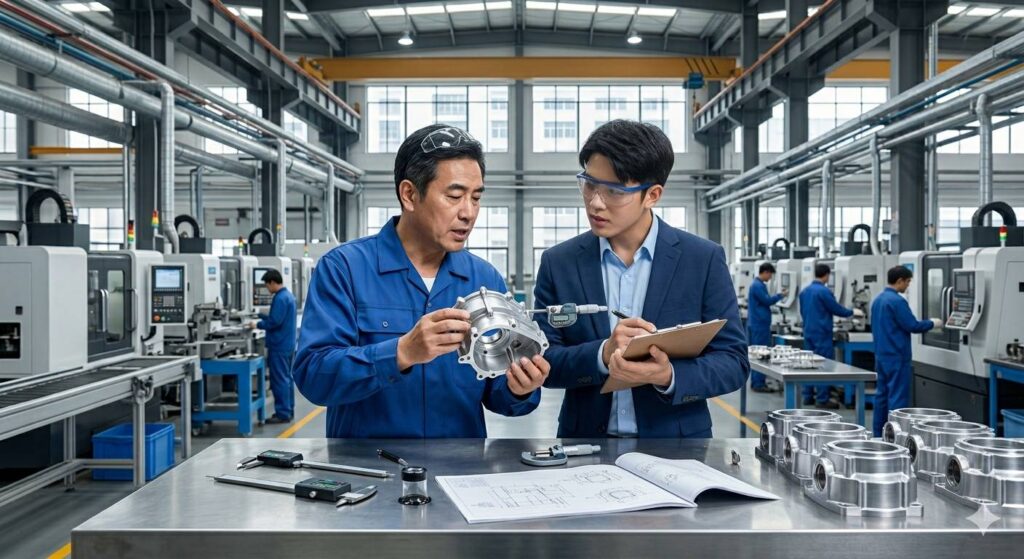
Professional quality inspections should be carried out by an independent inspector or inspection company acting on behalf of the importer. The manufacturer should not be the sole party responsible for assessing its own production, as this creates a natural conflict of interest. For the factory, the priority is to complete production and ship the goods. For the importer, the priority is to receive products that meet the agreed requirements. An independent inspector evaluates the process from the customer's perspective and knows which aspects require particular attention.
This is why major global companies and experienced importers have treated independent inspections as a standard part of the purchasing process for many years.
It is also important to understand that professional quality inspection does not normally involve checking every single item in a shipment. In most cases, inspectors use the international AQL (Acceptable Quality Limit) standard, which involves randomly selecting and inspecting a representative sample. This makes it possible to assess the quality of an entire batch with a high degree of statistical confidence without having to open and inspect every carton.
Contrary to a common misconception, AQL does not mean that an importer simply agrees to accept a certain number of defective products. It is a statistical method for assessing the quality of a shipment based on an appropriately selected sample, and it has been used for many years by major importers around the world.
However, the most important thing to understand is this:
Quality inspection is not about finding someone to blame. Its purpose is to identify problems before the goods leave the factory and are shipped to the customer.
2. At What Stage Can Production Be Inspected?
Many importers associate quality control exclusively with inspecting finished goods before shipment. In reality, there are many more possibilities. Depending on the type of product, order value and level of risk, inspections can be performed at different stages of the production process.
The earlier problems are identified, the easier and less expensive they are to resolve. Correcting errors at the factory usually costs only a fraction of what customer complaints, returns or replacement of defective goods can cost after the products have arrived in Europe.
The most common types of inspections include:
PPI – Pre-Production Inspection
Inspection before production begins.
At this stage, the main focus is on raw materials, components and the factory's preparation for fulfilling the order. It is a good opportunity to make sure that the manufacturer has correctly understood the product specifications and will use the required materials.
IPC / DPI (DUPRO) – During Production Inspection
Inspection during production.
This is usually carried out once approximately 20–50% of the order has been produced. This makes it possible to identify potential problems before the entire production run has been completed, avoiding a situation in which the entire batch requires costly corrections.
PSI – Pre-Shipment Inspection
Inspection before shipment.
This is the most commonly performed type of inspection. Once production has been completed and the goods are ready for shipment, the inspector randomly selects products according to the international AQL standard. The inspector evaluates workmanship, compliance with specifications, completeness, labeling, packaging and the quantity of products manufactured.
The importer most often uses the results of this inspection to decide whether to approve the shipment.
CLC – Container Loading Check
Inspection during container loading.
The final stage involves supervising the loading process. The inspector verifies that the correct goods are loaded into the container in the correct quantities and that they have been properly secured for transportation. This helps prevent order fulfillment mistakes and damage caused by improper cargo placement.
When Should Each Type of Inspection Be Used?
The choice of the appropriate inspection depends primarily on the stage of production, order value and level of risk associated with the project. Not every inspection is necessary in every situation, but each type addresses different importer needs.
Pre-Production Inspection (PPI) is particularly useful when working with a new manufacturer for the first time, producing under your own brand (OEM/ODM), or when the order requires specific materials and components. It helps confirm that the manufacturer has correctly understood the specifications and is properly prepared to begin production.
During Production Inspection (IPC/DPI, also known as DUPRO) is particularly useful for large or more complex orders. It allows potential problems to be identified after part of the batch has been produced, before they affect the entire production run. In practice, this gives the manufacturer an opportunity to make corrections while production is still underway and significantly reduces the risk of costly rework after production has been completed.
Pre-Shipment Inspection (PSI) is the most commonly selected type of inspection. In most cases, it is worth carrying out for every significant import. It allows finished products to be checked for workmanship, compliance with specifications, order completeness, labeling, packaging and the quantity of products manufactured. The importer most often uses the inspection results to decide whether to approve or hold the shipment.
Container Loading Check (CLC) is particularly useful for full container loads and high-value goods. Its purpose is to confirm that the correct products are loaded into the container in the correct quantities and that they are properly positioned and secured for transportation. This helps prevent mistakes during order fulfillment as well as damage caused by improper loading.
In practice, experienced importers rarely rely on just one type of inspection. For more demanding projects, they often combine several inspection stages, adjusting their scope to the order value, product type and level of risk. This approach works equally well when importing from China and Thailand.
A properly planned quality control system can identify most problems before the goods are shipped — at a point when correcting them is much easier, faster and significantly less expensive than after the products have arrived in Europe.
3. What Problems Are Most Commonly Detected During Quality Inspection?
Many business owners imagine quality inspection as simply looking for damaged products. In reality, the scope of a professional inspection is much broader.
An inspection can identify defects in the products themselves as well as problems related to order completeness, labeling, packaging or preparation for transportation.
The most common non-conformities can be divided into several groups.
Quality Issues
These are among the most frequently encountered non-conformities. Inspectors regularly identify:
incorrect product color or shade,
use of materials different from those agreed upon,
use of lower-cost components,
differences compared with the approved reference sample (Golden Sample),
workmanship defects, scratches, cracks or uneven finishing,
problems with product functionality.
Even small differences between an approved sample and mass-produced goods can lead to complaints, returns or the need to reproduce an entire batch. The absence of a clearly approved Golden Sample is one of the most common causes of disputes between importers and manufacturers.
Quantity and Completeness Issues
Not every problem concerns workmanship or product quality. It is equally common to encounter:
incorrect quantities,
missing components,
mixed-up models or product versions,
incorrect accessories,
incorrect color variants.
Such mistakes can completely disrupt sales, even when the products themselves have been manufactured correctly.
Labeling and Documentation Issues
Formal requirements are becoming increasingly important as well. Inspections often reveal:
incorrect CE markings,
missing required symbols,
incorrect labels,
errors in user instructions,
incorrect country-of-origin markings,
missing logos or incorrect printing,
inconsistent batch numbers,
missing required certificates.
In many industries, such non-conformities can prevent a product from being legally placed on the European market.
Packaging and Logistics Issues
Quality inspection also covers how goods are prepared for transportation. The most common problems include:
damaged cartons,
damp packaging,
inadequate product protection,
incorrect markings on master cartons,
improper placement of goods on pallets,
insufficient protection against sea transportation conditions.
These factors can often determine whether the goods arrive in Europe in good condition.
Most importantly, the vast majority of these problems can still be corrected at the factory. Once the container has been loaded and the ship has departed, the possibilities for taking corrective action become much more limited, while the cost of any necessary corrections can increase dramatically.
Regardless of whether the goods are imported from China or Thailand, the principle remains the same: The cheapest time to correct a problem is during production — not after the goods have reached the customer's warehouse in Europe.
4. How Much Does Skipping Quality Inspection Really Cost?
Many importers focus on negotiating the product price, trying to reduce it by a few percent. In reality, the quality of the goods received can have a much greater impact on the final financial outcome.
Skipping quality inspection can make even the best-negotiated price completely irrelevant.
Imagine a situation in which you order a full container of products from China or Thailand. The manufacturer sends photos of the finished goods. Everything looks correct, so you decide to skip the inspection in order to save a few hundred euros.
Several weeks later, the container arrives in Europe. During unloading, you discover that some products have workmanship defects, some differ from the approved reference sample, and others were improperly packaged and damaged during transportation.
At this stage, your options are already very limited. The goods are thousands of kilometers away from the manufacturer, and resolving the problem means additional costs, delays and often difficult negotiations with the supplier.
The most common consequences include:
customer complaints,
product returns,
the need to sort and repackage the goods,
additional storage costs,
disposal of defective products,
the need to reorder missing or defective goods,
delays in fulfilling customer orders,
loss of customer trust,
loss of part or even all of the expected profit.
In many cases, pursuing a claim against an overseas manufacturer can be lengthy and complicated. Even if the supplier accepts the complaint, they may only offer compensation against a future order, which does not solve the immediate problem.
For this reason, experienced importers do not compare the cost of quality inspection with the cost of the goods themselves. They compare it with the potential losses that could result from not carrying out the inspection.
A professional inspection typically costs a few hundred euros. By contrast, the consequences of receiving a defective container worth tens of thousands of euros can result in losses amounting to several thousand or even tens of thousands of euros.
There are also costs that cannot easily be measured in financial terms. Damage to brand reputation, negative customer reviews, delays in sales and broken business relationships can often prove far more damaging than the value of the defective goods themselves.
This is why professional importers treat quality inspection as an essential part of risk management rather than an additional expense.
One properly conducted inspection can protect a business from losses many times greater than the cost of the inspection itself.
5. What Does a Professional Inspection Report Look Like?
A quality inspection is valuable only when its results are presented accurately and transparently, allowing the importer to make the right decision.
For this reason, the final outcome of a professional inspection is a detailed report showing the actual condition of the shipment before it leaves the factory.
A good inspection report should primarily include:
date and location of the inspection,
manufacturer's name and order number,
number of products manufactured and inspected,
AQL inspection level applied,
photographic documentation,
description of all identified non-conformities,
measurements of key parameters,
functional test results,
assessment of packaging and preparation for transportation,
inspector's final recommendation.
One of the most important elements of the report is the photographic documentation taken during the inspection. The photographs should show both products that meet the requirements and all identified non-conformities. This allows the importer to assess the scale of the problem personally, even when they are thousands of kilometers away from the factory.
A professional report also distinguishes between different types of defects.
They are most commonly classified as:
Critical Defects – defects that may pose a safety risk to the user or make the product unsuitable for sale,
Major Defects – defects affecting product functionality or significantly reducing its quality,
Minor Defects – mainly cosmetic defects that do not affect normal product use.
Based on the number of detected non-conformities and the applicable AQL level, the inspector provides a final assessment of the shipment.
This most commonly takes one of three forms:
PASS – the shipment meets the agreed requirements and can be shipped,
FAIL – the number or type of defects exceeds the acceptable limits,
PENDING – the identified non-conformities must be corrected and the shipment re-inspected before dispatch.
It is important to remember that the report itself is not the goal. Its purpose is to provide the importer with objective information that allows them to decide whether to:
approve the shipment,
require the identified defects to be corrected,
conduct a re-inspection,
or, in extreme cases, completely stop the shipment.
A professional inspection report is also a powerful tool during negotiations with the manufacturer. Non-conformities documented with photographs and detailed descriptions make it much easier to negotiate corrections, replacement of products or a reduction in price.
Regardless of whether the inspection was conducted in China or Thailand, a well-prepared report allows decisions to be based on facts rather than solely on the manufacturer's assurances. That is why it is one of the most important documents in the entire import process.
6. Does Quality Inspection Provide a 100% Guarantee?
This is one of the questions most frequently asked by entrepreneurs who are starting to import from Asia.
The answer is: no.
No quality inspection can provide a 100% guarantee that every single item in an order will be completely free of defects.
That does not mean that quality inspection is ineffective. Quite the opposite – its purpose is to minimize risk as much as possible, not to completely eliminate every potential problem.
The main reason is the way professional inspections are conducted. In most cases, an inspector does not check every single product, but instead examines a randomly selected sample in accordance with the international AQL (Acceptable Quality Limit) standard. This method has been used by major companies around the world for many years and is considered one of the most effective ways of assessing the quality of an entire production batch.
Inspecting every individual item would, in most cases, be economically unjustifiable, time-consuming, and often simply impossible. This is why statistical methods are used to assess the quality of an entire batch with a high degree of probability.
It is also important to remember that there are factors that no inspection can completely eliminate. These include:
hidden defects that only become apparent during use,
damage occurring during transportation,
human error,
differences between successive production batches,
improper storage of goods after they leave the factory.
For this reason, experienced importers do not treat quality inspection as the only safeguard in the import process.
The best results come from combining several elements:
thorough supplier verification,
detailed technical product specifications,
approval of a reference sample (Golden Sample),
professional quality inspection,
and, where necessary, container loading inspection.
This approach significantly reduces risk both when importing from China and from Thailand.
In practice, the goal of quality inspection is not to achieve an impossible 100% level of certainty.
Its purpose is to identify problems at a stage when they can still be resolved quickly and relatively inexpensively – before the goods leave the factory and begin their journey to Europe, which can take several weeks.
That is why professional importers do not ask:
“Does quality inspection provide a 100% guarantee?”
They are much more likely to ask:
“How much can it reduce the risk of losing tens of thousands of euros?”
And this is where the greatest value of a properly conducted quality inspection lies. It does not eliminate risk entirely, but it can reduce it to a level that is acceptable and can be consciously managed.
7. When Is Quality Inspection Absolutely Necessary?
Not every order requires the same level of supervision. However, there are situations in which foregoing quality inspection significantly increases the risk of costly problems. The higher the order value, the more technically complex the product, or the more serious the consequences of potential defects, the more professional inspection becomes a standard rather than an optional service.
Quality inspection is particularly recommended in the following situations:
First Order with a New Manufacturer
Even if the company makes a very good impression and has successfully passed the verification process, the first order always involves the highest level of uncertainty. An inspection helps confirm that the actual production quality matches the previously agreed requirements.
Private Label Production (OEM / ODM)
When your company logo appears on the product, you are the one responsible for its quality in the eyes of your customers. Any defect can directly affect your brand's reputation, making quality inspection an important part of protecting your company's image.
High-Value Orders
The cost of quality inspection is usually only a small percentage of the total order value, while discovering problems only after delivery can result in losses amounting to tens of thousands of euros.
Seasonal Products
For Christmas, summer, promotional or other seasonal products, there is often no time for re-production. Discovering defects after delivery can mean losing the entire sales season.
Electronics, Toys, Children's Products, Medical Products and Products Subject to Safety Requirements
In these industries, even minor non-conformities can result in serious legal, financial and reputational consequences.
Products Requiring Compliance with European Market Regulations
This includes, among others, CE marking, RoHS, REACH, as well as other requirements arising from regulations applicable within the European Union.
Changes to the Manufacturer, Materials or Production Process
Even with a long-standing supplier, any significant change increases the risk of quality problems. A new subcontractor, changes to components or modernization of a production line can all affect the final quality of the product.
It is worth remembering that quality inspection is not a solution reserved exclusively for large multinational corporations. More and more small and medium-sized businesses are using it to reduce risk from their very first order.
Based on Silk Bridge Agency's experience, both in China and Thailand, most quality issues can be identified before the goods are shipped. This is precisely why a well-planned quality inspection so often determines the success of an entire import project.
8. Frequently Asked Questions (FAQ)
How much does a quality inspection cost?
The cost depends on the scope of the inspection, the location of the factory and the type of product. In most cases, however, it represents only a small percentage of the total order value and is incomparably lower than the potential losses resulting from receiving defective goods.
How long does a typical inspection take?
Usually between one and several days, depending on the size of the batch and the scope of the inspection. The inspection report is generally prepared on the same day or within 24 hours of completing the inspection.
Can a manufacturer refuse to allow an inspector into the factory?
Yes. However, reputable manufacturers rarely have a problem with this. Reluctance to allow an independent inspection should be treated as a warning sign and should prompt the importer to reassess the risks of the cooperation.
Is it worth inspecting small orders as well?
It depends on the value of the goods and the potential consequences of any errors. For a first order or private-label production, a professional inspection can often be justified even for relatively small batches.
Can I participate in the inspection personally or remotely?
Yes. In many cases, a client's representative can be present, or the inspection can be conducted online via live video transmission. However, inspections are most commonly performed by an independent local inspector acting on behalf of the importer.
What happens if the inspection identifies problems?
Depending on the nature of the issues discovered, the manufacturer may correct the defects, replace defective products, improve the packaging or manufacture missing components. This allows most problems to be resolved before shipment.
Is the inspection report available in Polish or English?
Inspection reports are normally prepared in English. If necessary, the key findings can also be discussed or presented in Polish.
Can I conduct the quality inspection myself?
It is possible during a personal visit to the factory, but it requires experience and knowledge of inspection procedures. In practice, most importers use independent inspectors with the appropriate qualifications and experience.
What percentage of the goods is inspected?
The most common approach is random sampling in accordance with the AQL (Acceptable Quality Limit) standard. This means that a representative sample of products is inspected rather than the entire batch. This makes it possible to effectively assess the quality of the batch while keeping inspection costs reasonable.
Can an inspection report help in a dispute with the manufacturer?
Yes. A professional report contains photographs, descriptions of identified non-conformities and inspection results, making it valuable evidence during negotiations with the manufacturer and helping the importer decide whether to accept the shipment, request corrective action or reject the batch..
9. Conclusion
When importing from China and Thailand, many entrepreneurs focus primarily on the purchase price. However, the success of the entire project is much more often determined not by the price of the product, but by its quality when it reaches the customer.
Even the best-negotiated deal loses its value if part of the shipment turns out to be defective, does not comply with the agreed specifications or requires costly claims and returns. Problems discovered only after the goods have been delivered to Europe are usually many times more expensive to resolve than problems identified and corrected during production.
For this reason, experienced importers treat quality inspection not as an additional expense, but as one of the most important elements of risk management. A professional inspection allows most non-conformities to be identified before shipment, giving the manufacturer an opportunity to correct them and allowing the importer to avoid financial losses, delays and customer-related problems.
It is also important to remember that quality inspection alone cannot replace proper supplier selection. The highest level of security comes from combining several elements: thorough supplier verification, a well-prepared product specification, an approved reference sample (Golden Sample), and an appropriately selected quality inspection carried out at the right stage of production.
This comprehensive approach helps effectively reduce risk both when importing from China and Thailand, while also allowing businesses to build long-term relationships with reliable manufacturers.
In a competitive market, the advantage goes not to those importers who buy at the lowest price, but to those who can manage risk consciously and make decisions based on reliable information.
The most expensive quality inspection is the one that was never performed.
Key Takeaways
Product price should never be the only criterion when choosing a supplier.
Professional quality inspection allows most problems to be identified before shipment.
A single properly conducted inspection can protect a company from losses amounting to thousands of euros.
An inspection report provides objective information about the quality of a production batch and supports informed business decisions.
The highest level of security comes from combining supplier verification, precise product specifications and appropriately selected quality inspection.
In both China and Thailand, quality inspection is one of the most effective ways to reduce import risks.
Planning to Import from China or Thailand?
Don't risk receiving goods that fail to meet your expectations.
Silk Bridge Agency organizes independent quality inspections at manufacturers in China and Thailand. We work with experienced local inspectors, prepare detailed inspection reports and help clients assess product quality before the goods are shipped.
This allows you to make decisions based on facts rather than solely on the manufacturer's assurances. You can reduce the risk of costly claims, delays and unexpected expenses while gaining greater confidence that your order will meet the agreed requirements before it leaves the factory.
A properly conducted quality inspection is a small investment that can protect your company from losses amounting to thousands of euros and provide a smoother, safer import process.
Looking for a Trusted Partner in Asia?
Looking for a Trusted Partner in Asia?
Planning to import from China or Thailand? We can help you find the right manufacturer, verify suppliers and safely manage the entire import process.
Let’s talk about your project.
Planning to import from China or Thailand? We can help you find the right manufacturer, verify suppliers and safely manage the entire import process.
Let’s talk about your project.
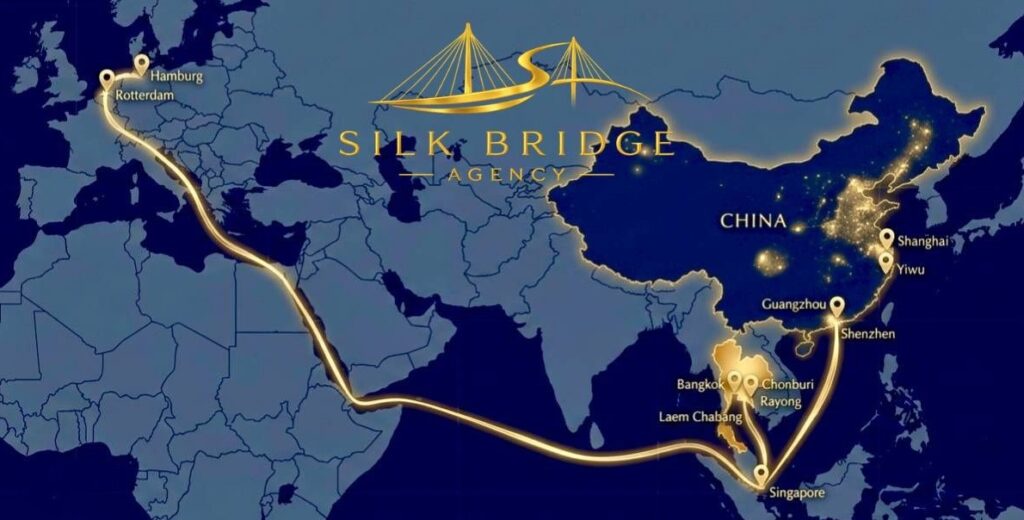
Helping businesses across Europe and the United States source products from China and Thailand with confidence.
Helping businesses across Europe and the United States source products from China and Thailand with confidence.
Contact:
We typically respond within 24 hours.
Where We Are