Silk Bridge Journal
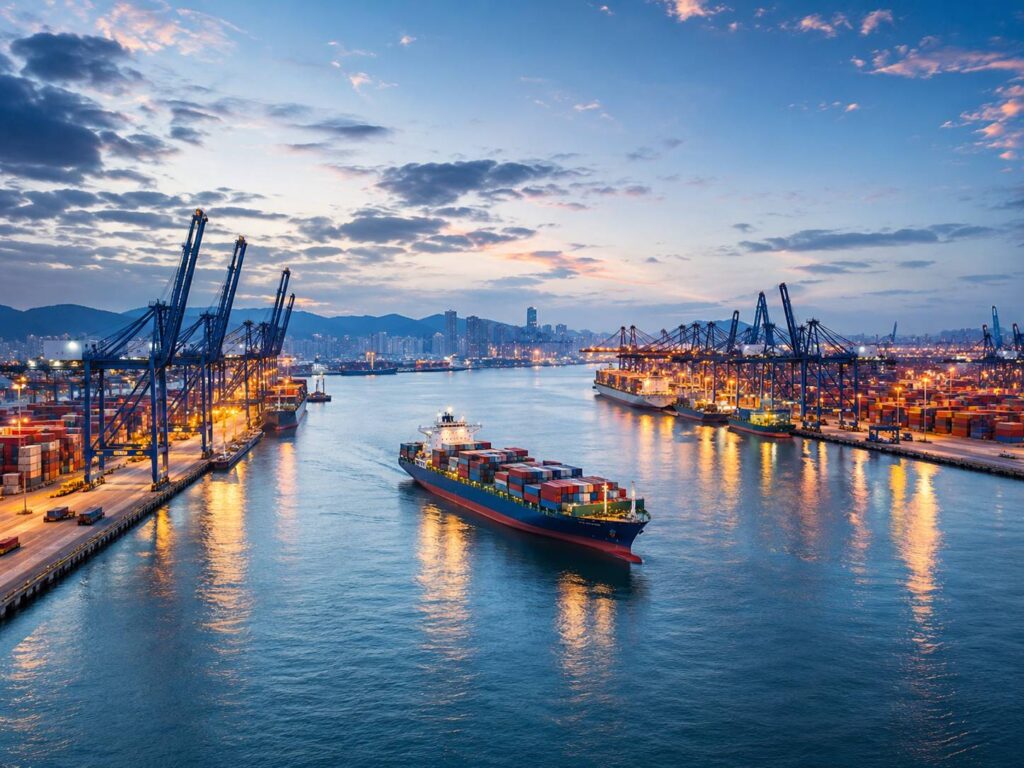
How to Safely Start Importing from China
A Complete Guide for Businesses
Introduction
Importing from China has been one of the most effective ways for businesses to increase their competitiveness for many years. It gives entrepreneurs access to an enormous range of products, modern technologies and manufacturers who often offer significantly more competitive terms than European suppliers.
At the same time, many myths have developed around importing from China. For some, it is a simple way to make quick profits. For others, it is a complicated and risky process filled with dishonest suppliers, quality issues and difficult formalities.
The reality is different.
Importing from China is neither inherently easy nor inherently dangerous. It is a business process that — like any significant investment — requires proper preparation, knowledge and well-considered decisions.
A well-planned import operation can become a source of competitive advantage and long-term business growth. On the other hand, mistakes made at the very beginning can cost much more than just money. They can result in lost time, damaged customer trust and even a slowdown in business development.
That is why the purpose of this guide is not to encourage you to import at all costs. Our goal is to show you what the entire process looks like, what decisions need to be made at each stage and how to consciously reduce risk.
If, after reading this article, you have a better understanding of the entire import process and avoid even one costly mistake, then this guide will have fulfilled its purpose.
1. Why Are More and More Companies Importing from China?
Over the past several decades, China has become the world's manufacturing hub. It produces not only everyday consumer goods, but also advanced electronic equipment, industrial components, machinery and products sold under some of the world's most recognizable brands. Today, it is difficult to find an industry in which Chinese manufacturers do not play an important role.
For businesses, importing from China primarily means the opportunity to purchase products directly from manufacturers, eliminating many intermediaries. This can often result in better pricing, greater influence over product specifications and a genuine opportunity to build a private brand. More and more companies are moving away from simply reselling finished products and adopting Private Label, OEM or ODM models, allowing them to have greater control over product quality, appearance and profit margins.
Price, however, is not the only reason businesses choose to work with Chinese manufacturers. Other equally important advantages include:
A huge choice of manufacturers and suppliers – China has highly specialized industrial clusters. Shenzhen is renowned for electronics, Yiwu for small commodities and everyday consumer goods, Foshan for furniture and ceramics, while other regions specialize in textiles, tools, industrial components and many other products. This specialization makes it much easier to find the right business partner.
Product customization – many factories can adapt a product's design, colors, packaging or functionality to the customer's requirements, often even for relatively small orders.
Rapid adoption of new technologies – Chinese companies are now among the most innovative manufacturers in the world. In many industries, they are among the first to implement new technologies and materials, enabling importers to respond more quickly to changing market trends.
Production flexibility – manufacturers can handle both large-scale production runs and smaller test batches, while also being able to introduce structural and design changes relatively quickly.
Experience working with customers from around the world – most larger factories have been working with customers from Europe and North America for many years. As a result, they understand requirements related to quality, documentation, delivery times and international business standards.
It is important to remember, however, that a low price should never be the main criterion when choosing a supplier. Product quality, manufacturer reliability, stability of cooperation and the total cost of importing are far more important.
The total cost includes not only the purchase price, but also transportation, insurance, customs clearance, taxes, quality control, warehousing and any potential costs related to claims and after-sales service.
A successful import operation is not about finding the cheapest product. It is about finding the best solution for a particular business — one that provides the right balance between price, quality, security and long-term profitability.
More and more entrepreneurs are also recognizing that Chinese manufacturing has undergone a tremendous transformation. The idea that products made in China are exclusively cheap and low-quality has long ceased to reflect reality in many industries. Numerous factories operate according to international quality standards, hold certifications such as ISO, CE or RoHS, and invest in their own research and development departments.
As a result, importing from China is no longer simply a way to reduce costs. Increasingly, it is becoming a deliberate element of a company's strategy for building competitive advantage.
2. Is Importing from China Right for Every Business?
Although importing from China offers enormous opportunities for businesses, it does not mean that it will be the best solution for every company. The greatest benefits are achieved by businesses that have a clearly defined business model, understand their customers' needs and can plan purchases sufficiently in advance. Importing requires patience, preparation and informed decision-making.
It is not always worth importing a product simply because its manufacturer's price appears attractive. The purchase price must be supplemented by transportation, insurance, customs clearance, taxes, warehousing, quality control and potential claims-related costs. Only by analyzing all of these elements can you assess the actual profitability of the project.
In practice, a product that appears significantly cheaper in China may, after all costs have been taken into account, provide little or no meaningful advantage over purchasing from a European distributor.
Importing works particularly well for companies that:
have stable sales and predictable demand,
plan to build their own brand,
are thinking about long-term development,
can plan purchases several months in advance,
have sufficient capital to finance production and transportation before sales begin.
If, on the other hand, you need small quantities of goods, require immediate product availability or are only testing a new product category, purchasing from a European distributor may prove to be a more cost-effective and safer solution.
When deciding whether to import, it is also worth considering several practical factors:
Minimum Order Quantities (MOQ) – many manufacturers expect orders ranging from several hundred to several thousand units. For first-time importers, this can represent a significant barrier.
Lead times – from placing an order to receiving the goods, it usually takes between 6 and 12 weeks. This includes production, transportation and logistics procedures. The company must therefore plan its inventory and cash flow accordingly.
Knowledge of import procedures – importing involves much more than simply purchasing a product. It requires an understanding of Incoterms, customs tariffs, taxes, certification requirements and procedures for verifying business partners.
Product-specific requirements – different product categories are subject to different import requirements. Electronics, textiles, furniture and household goods are subject to different regulations than food, medical devices or products covered by specific regulatory requirements.
The most important question is therefore not:
„“Is it worth importing from China?””
A much more important question is:
„“Is importing from China the best solution for my business model?””
The answer should be based on a reliable analysis of costs, risks, financial capabilities and long-term business objectives — not simply on an attractive price shown in a manufacturer's catalogue.
3. What Does the Import Process from China Look Like Step by Step?
Importing from China is a multi-stage process, with every stage affecting transaction security, product quality and the final cost of the entire project. Skipping even one of these stages can lead to delays, additional expenses or problems receiving the goods. The good news, however, is that when properly planned, the import process can be organized and predictable.
Below are the key stages of the entire process.
1. Defining the Product and Preparing the Specification
The first step is to clearly define the product you want to import. It is worth preparing a detailed specification covering technical parameters, materials, dimensions, colors, manufacturing tolerances, packaging, labeling and required certifications.
This specification forms the foundation of cooperation with the manufacturer. The more precisely you describe your expectations, the lower the risk of misunderstandings during production.
2. Finding Potential Manufacturers
The next stage is to identify suitable suppliers and compare their offers. It is important to consider more than just price. Pay attention to the manufacturer's experience, communication quality, production capabilities, minimum order quantities (MOQ) and feedback from other customers.
A good practice is to compare offers from several manufacturers rather than making a decision based on the first attractive proposal.
3. Verifying the Manufacturer
Before placing an order, you need to establish who you are actually going to work with. Manufacturer verification may include analyzing company registration documents, assessing the company's operating history, checking whether the company actually owns or operates its own factory and, in many cases, conducting an on-site factory audit.
This is one of the most important stages of the entire process. Proper verification can help prevent cooperation with dishonest intermediaries or companies that are unable to fulfill the order according to your requirements.
4. Negotiating the Terms of Cooperation
Once a manufacturer has been selected, negotiations begin regarding price, minimum order quantities, payment terms, production lead time, packaging and delivery terms based on Incoterms rules, such as EXW, FOB or CIF.
At this stage, it is also worth establishing procedures for dealing with delays, claims and quality discrepancies. Clear agreements from the beginning can prevent many problems in the future.
5. Production
After the order has been approved and the agreed deposit has been paid, the manufacturer begins production. Depending on the type of product and order volume, production can take anywhere from several days to several months.
During this period, it is worth maintaining regular communication with the manufacturer and monitoring production progress. This makes it possible to identify potential issues before production is completed.
6. Pre-Shipment Quality Control
After production has been completed, but before the goods are loaded for shipment, it is worth conducting an independent Pre-Shipment Inspection.
An inspection allows you to verify that the products comply with the agreed specification, identify potential defects and assess the quality of workmanship, packaging and labeling. In many cases, a single professional quality inspection can prevent losses amounting to thousands of euros.
7. Organizing Transportation
Once the quality inspection has been successfully completed, the goods are transported to a port or airport and begin their journey to the importer's country.
Depending on the type and value of the product and the required delivery time, you can choose sea, rail or air freight. Each option has its advantages and limitations, so the choice should be tailored to the specific project.
8. Customs Clearance
Once the goods arrive in the destination country, customs clearance takes place, including the payment of duties such as customs duty, VAT and any other applicable charges, followed by the release of the goods for free circulation.
At this stage, properly prepared documentation and the correct classification of the product under the appropriate customs tariff code are extremely important.
9. Delivery to the Warehouse
The final stage is transporting the goods to the importer's warehouse or directly to the end customer.
After receiving the shipment, it is worth checking its condition and comparing the delivered goods with the documentation and order specification. This is the final opportunity to identify any discrepancies.
Importing Is a Process, Not a Single Transaction
Although the entire process may initially seem complicated, it becomes much easier when each stage is properly planned.
Experienced importers do not try to accelerate individual stages at all costs. Instead, they focus on preparing the entire process properly, because this is what has the greatest impact on the safety, quality and profitability of the import operation.
4. The Most Common Mistakes Made by First-Time Importers
Most problems associated with importing from China can be effectively avoided. Paradoxically, the greatest threat is not dishonest suppliers but a lack of proper preparation.
First-time importers often focus exclusively on the product price while overlooking many factors that have a much greater impact on the success of the entire project. As a result, an attractive price can turn into a very expensive lesson.
Below are some of the most common mistakes.
1. Choosing the Cheapest Offer
A low price often means compromises in the quality of materials, workmanship, quality control or customer service.
An apparent saving can, in practice, lead to claims, returns, lost customers or the need to reorder an entire shipment.
Experienced importers understand that the cheapest offer is very rarely the most advantageous one.
2. Failing to Verify the Manufacturer
Not every company presenting itself as a manufacturer actually owns or operates its own factory.
Many intermediaries and trading companies operate on B2B platforms, and there are also cases of fraudsters using attractive prices to obtain advance payments.
Failing to check registration documents, operating history, production capabilities and customer feedback is one of the most common causes of problems during a first import.
3. An Inaccurate Product Specification
A manufacturer will produce exactly what has been specified in the order — nothing more.
If the specification is incomplete or ambiguous, the finished product may differ significantly from expectations.
Differences often concern material quality, colors, component thickness, packaging or finishing details.
4. Skipping Quality Control
Photos provided by a manufacturer can never replace a professional inspection.
Only an independent quality inspection can identify discrepancies before the goods are shipped. This is a significantly less expensive solution than trying to resolve problems after a container has already arrived in Europe.
5. Failing to Understand the True Cost of Importing
The product price is only one part of the total cost.
A complete calculation should include transportation, insurance, customs duties, VAT, customs clearance, warehousing, quality control and potential claims-related costs.
Only then can you realistically assess whether the import is profitable.
6. Placing Too Large an Initial Order
Many first-time importers want to order a large shipment immediately in order to obtain a lower unit price.
This can be one of the most expensive mistakes.
It is much safer to begin cooperation with a smaller test order, which allows you to assess product quality, communication with the manufacturer and market response.
7. Unclear Terms of Cooperation
A lack of precise agreements regarding payment terms, production deadlines, responsibility for transportation or Incoterms rules often leads to misunderstandings.
Every important aspect of the cooperation should be agreed upon before production begins and confirmed in writing.
8. Underestimating Cultural Differences
Working with Chinese manufacturers requires patience, precise communication and an understanding of cultural differences.
Overly general instructions, rushing the process or unclear expectations can easily lead to misunderstandings that could have been avoided.
The Biggest Mistake Is a Lack of Preparation
The most common mistake is not choosing the wrong manufacturer or making one specific error during an order.
The biggest mistake is believing that importing ends once you have found a supplier.
In reality, that is only the beginning of the entire process.
Proper preparation, thorough manufacturer verification, quality control and informed planning are what ultimately determine whether importing becomes a source of profit or a source of costly problems.
5. How to Reduce Risk When Importing?
The risks associated with importing cannot be completely eliminated. However, they can be effectively reduced by following proven procedures and making informed decisions at every stage of cooperation with a manufacturer.
Experienced importers do not try to avoid risk at all costs. They understand that international trade always involves factors over which they do not have full control. The key is therefore not to eliminate risk, but to manage it properly.
Below are the most important principles of safe importing.
Work Only with Verified Manufacturers
Do not make decisions based solely on an attractive price or a professionally designed website. Before placing an order, check the company’s registration documents, business history, the actual nature of the business, and its production capabilities.
If you are planning a larger order, it is worth considering a factory audit. The cost of such verification is small compared with the potential losses that may result from working with the wrong business partner.
Prepare a Detailed Product Specification
One of the foundations of safe importing is precisely defining all the parameters of the product you are ordering.
The specification should include, among other things:
materials,
dimensions,
colors,
production tolerances,
packaging method,
labeling,
required certificates,
workmanship quality.
The manufacturer will produce exactly what is specified in the documentation. Therefore, every imprecise piece of information increases the risk of receiving a product that differs from our expectations.
Establish Clear Terms of Cooperation
Before production begins, it is worth clearly defining:
payment terms,
production and delivery deadlines,
transportation method,
quality standards,
complaint procedures,
responsibilities of each party.
The more issues are agreed upon at the beginning of the cooperation, the fewer problems are likely to arise later.
It is good practice to confirm all important arrangements in writing.
Do Not Skip Quality Control
Pre-shipment quality control is one of the most cost-effective elements of the entire importing process.
A professional inspection can identify:
production defects,
discrepancies with the specification,
packaging problems,
damage,
incomplete orders.
It is much easier to resolve a problem while the goods are still at the factory than when the container has already arrived in Europe.
Do Not Focus Solely on Price
The lowest price very rarely means the best choice.
Much more important factors include:
manufacturer stability,
product quality,
on-time production and delivery,
communication,
experience working with international customers.
A professional importer analyzes the total cost and level of risk rather than simply the purchase price.
Work with Trusted Logistics Partners
A reliable freight forwarder and an experienced customs agency can often help avoid many problems related to documentation, customs clearance, and transportation arrangements.
The right logistics partner can also advise on the most cost-effective transportation method and help resolve unforeseen situations.
Plan Your Import Well in Advance
Haste is one of an importer’s biggest enemies.
When a company needs goods “immediately,” it becomes much more difficult to negotiate favorable terms, thoroughly verify the manufacturer, or conduct quality control.
A well-planned import can reduce costs, increase security, and help avoid many stressful situations.
Build Long-Term Relationships
The greatest benefits are achieved by entrepreneurs who do not treat importing as a one-time transaction.
Long-term cooperation with a trusted manufacturer makes it possible to gradually improve product quality, negotiate better commercial terms, and build a stable supply chain.
Trust in international business takes years to build, but it brings tangible benefits to both parties.
Safe Importing Starts with Good Decisions
Importing from China is not about avoiding every possible risk. It is about making informed decisions based on knowledge, experience, and proper preparation.
The better you plan the entire process, the greater your control over its safety, costs, and the ultimate success of the project.
6. How Much Does Importing from China Really Cost?
One of the most common mistakes made by first-time importers is comparing only the product price shown in the manufacturer’s offer.
At first glance, the offer may seem exceptionally attractive. In practice, however, the purchase price represents only part of the total cost of importing.
It is precisely the failure to account for all additional expenses that causes many people to incorrectly assess the profitability of the entire project.
The Product Price Is Only the Beginning
The total cost of importing may include:
product purchase price,
cost of preparing samples,
production molds or tooling, if required,
packaging preparation,
transportation from the factory to the port or airport,
international transportation,
cargo insurance,
port and terminal fees,
customs clearance,
customs duties,
VAT
transportation to the importer’s warehouse,
warehousing,
quality control,
potential complaints or replacement of defective goods,
financing costs associated with tied-up capital.
Only the sum of all these elements reveals the actual profitability of the import.
An Apparent Saving Can Turn Out to Be Very Expensive
In practice, it often happens that a product offered by one manufacturer is several percent cheaper than the competition.
At first glance, it looks like a great opportunity.
However, after a more detailed analysis, it may turn out that the manufacturer is located in a less favorable location, requires more expensive domestic transportation, offers lower workmanship quality, or does not provide adequate protection of the goods during transportation.
As a result, the total cost of importing may be higher than when working with a manufacturer whose initial offer appeared to be more expensive.
What Matters Is the Total Cost of Delivering the Product
Experienced importers do not compare purchase prices alone.
They analyze the so-called total cost of delivering the product to their own warehouse — Total Landed Cost.
This allows them to realistically compare different offers and assess which one will be the most profitable from the perspective of the entire business.
This approach helps avoid many incorrect purchasing decisions.
The Cheapest Product Does Not Always Generate the Highest Profit
A product made from better materials, subject to professional quality control, and delivered on time often proves to be much more profitable than the cheapest available offer.
Based on the experience of Silk Bridge Agency, entrepreneurs starting to import most often focus on the purchase price. Meanwhile, the success of the entire project is much more often determined by the quality of cooperation with the manufacturer, production consistency, and delivery predictability. A small difference in unit price very often means significantly greater peace of mind and fewer problems in the future.
Higher quality means:
fewer complaints,
greater customer satisfaction,
better reviews,
more repeat orders,
a stronger brand position.
In the long term, these are the factors that determine business profitability.
Remember About Warehousing Costs and Tied-Up Capital
A lower unit price resulting from a very large order may look attractive.
However, if the company is unable to sell all the goods within a reasonable period of time, additional costs arise:
warehousing,
inventory insurance,
tied-up capital,
the risk of changing market trends,
loss of financial liquidity.
That is why experienced importers plan order volumes not only based on price, but primarily on actual market demand.
A Professional Importer Asks Different Questions
A first-time importer most often asks:
„“Where can I buy this at the lowest price?””
An experienced importer asks:
„“Which offer will be the most profitable for my company, taking into account quality, security of cooperation, delivery times, and the total cost of importing?””
It is precisely this change in mindset that very often determines success in international trade.
7. How Long Does Importing from China Take?
One of the biggest mistakes made by first-time importers is believing that bringing goods from China takes only a few or a dozen days. In reality, importing is a process that requires proper planning and patience.
From the moment the decision to purchase is made until the goods arrive at a warehouse in Poland, it most often takes anywhere from several weeks to even several months. The exact timeframe depends on the type of product, the chosen mode of transportation, current market conditions, and many other factors.
This is precisely why experienced importers plan their purchases well in advance.
Stage 1. Finding a Manufacturer and Preparing the Order
Before production begins, it is necessary to find the right manufacturer, verify the company, prepare the product specification, and agree on all terms of cooperation.
If this is the first order from a particular supplier, this stage can take anywhere from several days to several weeks. In practice, this is precisely where it is not worth rushing, because most mistakes made at the beginning of the cooperation will affect all subsequent stages.
Stage 2. Production
After the order has been approved and the agreed deposit has been paid, the manufacturer begins production.
The production time depends primarily on the type of product, the size of the order, and the factory’s current workload.
For standard products, production may take several days or a couple of weeks. More complex projects, custom-made products, or larger production batches often require 4 to 8 weeks, and sometimes even longer.
It is therefore always worth allowing an appropriate time buffer.
Stage 3. Quality Control
After production has been completed, but before shipment, it is worth conducting an independent quality inspection.
The inspection itself usually takes between one and several days, but its importance is enormous. This is the last opportunity to identify potential discrepancies and correct them while the goods are still at the factory.
It is much easier to correct a product in China than to file a complaint about an entire batch after it has been delivered to Europe.
Stage 4. Transportation
The most commonly chosen solution is sea freight. It allows large quantities of goods to be transported at relatively low cost.
The average transit time for sea freight from China to Europe is usually between 25 and 40 days, depending on the port of loading, destination port, and current market conditions.
Rail freight is also becoming increasingly popular. It usually takes between 15 and 22 days and offers a compromise between delivery time and cost.
The fastest option remains air freight. Goods can reach Europe within just a few days, but the cost of this type of transportation is significantly higher and it is mainly worthwhile for high-value products or urgent deliveries.
The choice of the appropriate transportation method should always be based on an analysis of costs, delivery time, and the needs of the specific business.
Stage 5. Customs Clearance
Once the shipment reaches the destination country, customs clearance begins.
If the documentation has been properly prepared, the procedure usually takes between one and several business days.
In the event of missing documents, a customs inspection, or the need for additional testing, the process may take longer.
This is another reason why proper preparation of the entire import process before the goods are shipped is so important.
Stage 6. Delivery to the Warehouse
The final stage is transporting the goods from the port or terminal to the importer’s warehouse.
After receiving the shipment, it is worth checking the condition of the packaging and whether the delivered goods correspond to the documentation and order.
It is also good practice to take photographic documentation at the time of delivery. In the event of any transportation damage, this can make it significantly easier to pursue claims later.
What Can Extend the Entire Process?
The time required to complete an import is affected by many factors over which the importer does not always have direct control.
The most common include:
the Chinese New Year period and other holidays, when many factories suspend production,
seasonal congestion at ports,
limited container availability,
delays in sea transportation,
weather conditions,
additional customs inspections,
errors in documentation,
the need to introduce changes during production.
In practice, most of these problems can be avoided through proper planning.
A Good Importer Plans Several Months Ahead
The biggest difference between a beginner and an experienced importer is not knowledge of regulations or negotiation skills.
The biggest difference is the way they plan.
Professional importers do not wait until their warehouse is almost empty. They analyze sales, forecast demand, and place orders well in advance.
In the case of sea freight, a safe planning horizon is usually between 3 and 5 months. This gives the company greater control over transportation costs, allows enough time to conduct quality control, and helps avoid having to use more expensive express delivery options.
Well-Planned Importing Creates a Competitive Advantage
Importing from China is not a race against time.
The better you plan the entire process, the greater your control over costs, delivery times, and the safety of the entire project.
Haste almost always means greater risk and higher costs.
A well-planned import, on the other hand, allows you to build a stable, predictable, and profitable business — and that is precisely the goal of every entrepreneur operating in the international market.
8. Is It Worth Using Professional Support?
Importing from China can be organized independently. Many entrepreneurs start their journey into international trade in exactly this way. In practice, however, it quickly becomes clear that purchasing the product itself is only a small part of the entire process.
You need to find the right manufacturer, verify their credibility, prepare a precise product specification, negotiate the terms of cooperation, monitor production, organize quality control, transportation and customs clearance, and ensure that all documentation is correct. Each of these stages requires knowledge, experience, and time.
This does not mean that an entrepreneur cannot manage the process independently. It simply means that they must devote significantly more time to acquiring the necessary knowledge and accept the fact that their first experiences often involve costly mistakes — from quality problems and delays to unexpected logistics and customs costs.
In many cases, working with an experienced team allows you to:
find the right manufacturer faster,
avoid working with dishonest or unreliable suppliers,
reduce the risk of mistakes during negotiations and when establishing the terms of cooperation,
properly prepare commercial and customs documentation,
organize professional pre-shipment quality control,
optimize transportation costs and methods,
avoid problems during customs clearance,
save time that the entrepreneur can instead devote to developing their own business and sales.
This is particularly important when making your first import or starting cooperation with a new supplier. This is when almost every decision is being made for the first time, and a lack of experience significantly increases the risk of costly mistakes.
It is important to emphasize, however, that using professional support does not relieve an entrepreneur of responsibility for their own business. The best results are achieved by companies that actively participate in the entire process, understand its individual stages, and make informed decisions.
Professional support is not about doing everything on behalf of the client. It is about providing knowledge, experience, and proven solutions that make importing more predictable, safer, and more efficient.
The best partner does not make decisions for an entrepreneur. They help the entrepreneur make better decisions. That is what professional support in international trade is all about.
9. Frequently Asked Questions (FAQ)
Do I need to know Chinese?
No. Most manufacturers working with international customers communicate in English. Knowledge of Chinese can be an additional advantage during more advanced negotiations, but it is not necessary to conduct imports.
Do I need to have a registered business to import?
If you plan to import regularly for commercial purposes, operating a registered business is practically essential. Occasional imports for personal use are subject to different rules and generally do not require business registration.
How can I find a reliable manufacturer?
The best approach is to use several sources at the same time — B2B platforms, industry trade fairs, recommendations, and direct contacts — and thoroughly verify every supplier. You should never base your decision solely on an attractive price or a professionally designed website.
Is Alibaba safe?
Alibaba is a platform that facilitates contact with manufacturers and trading companies. However, the platform itself does not guarantee the quality or honesty of every supplier. Every business partner should be independently verified before cooperation begins.
Is it worth traveling to China before placing the first order?
It is not always necessary. In many cases, a manufacturer can be effectively verified remotely through a factory audit, document verification, and quality inspection. Traveling to China becomes particularly valuable for larger projects or when building a long-term business relationship.
How long does importing from China take?
The entire process — from selecting a manufacturer to delivering the goods to the warehouse — most often takes between two and four months. The exact timeframe depends on the type of product, production time, chosen transportation method, and customs procedures. For a well-planned sea freight import, a safe planning horizon is usually between three and five months.
How much money do I need for my first import?
There is no single universal amount. Everything depends on the type of product, minimum order quantities (MOQ), transportation costs, customs duties, and the planned scale of operations. It is also worth keeping a financial reserve for unexpected expenses.
Can I order a small quantity of goods?
Yes, but this depends on the particular manufacturer. Some factories offer low minimum order quantities, while others require significantly larger batches. A good solution for a first order is to place a test order, which allows you to assess product quality and the course of the cooperation without committing a large amount of capital.
Is importing from China still profitable?
In many industries, definitely. The key, however, is not finding the cheapest product, but choosing the right manufacturer, correctly calculating the total cost of importing, and properly planning the entire process.
Do I need an agent or intermediary company?
It is not mandatory. However, for a first import or more complex projects, the support of an experienced partner can significantly reduce the risk of mistakes, shorten the process, and help avoid costly problems.
10. Summary
Importing from China has remained one of the pillars of global trade for many years and continues to offer entrepreneurs significant opportunities for growth. Access to thousands of manufacturers, the ability to create private-label brands, and competitive production costs make China one of the most important directions for development for many companies.
At the same time, importing is not a simple transaction consisting solely of purchasing goods. It is a process that requires preparation, knowledge, and informed decision-making at every stage of cooperation with the manufacturer.
The greatest success is achieved by entrepreneurs who:
plan the entire process well in advance,
thoroughly verify their suppliers,
control product quality before shipment,
analyze the total cost of importing rather than just the purchase price,
build long-term relationships with trusted manufacturers.
A well-organized import process is not about finding the lowest price. It is about choosing the best solution for a specific business — one that provides the right balance of quality, security, and long-term profitability.
The more decisions you base on knowledge, experience, and reliable analysis, the greater the chance that importing will become a stable part of your company’s growth rather than a source of unnecessary problems.
Key Takeaways
If you remember only a few things from this entire article, let them be these:
✔ Do not choose a manufacturer solely based on the lowest price.
✔ Always verify your supplier before placing an order.
✔ Pre-shipment quality control is significantly cheaper than resolving problems after delivery.
✔ Analyze the total cost of importing, not just the product price.
✔ Plan your import well in advance — haste almost always means greater risk and higher costs.
✔ Treat importing as a process of building long-term business relationships, not as a one-time transaction.
Planning to Start Importing from China?
If you want to safely navigate the entire process — from selecting and verifying a manufacturer, through negotiations and quality control, to transportation and customs clearance — contact the Silk Bridge Agency team.
Together, we will plan your entire import process so that it is safe, predictable, and tailored to the needs of your business.
Looking for a Trusted Partner in Asia?
Looking for a Trusted Partner in Asia?
Planning to import from China or Thailand? We can help you find the right manufacturer, verify suppliers and safely manage the entire import process.
Let’s talk about your project.
Planning to import from China or Thailand? We can help you find the right manufacturer, verify suppliers and safely manage the entire import process.
Let’s talk about your project.
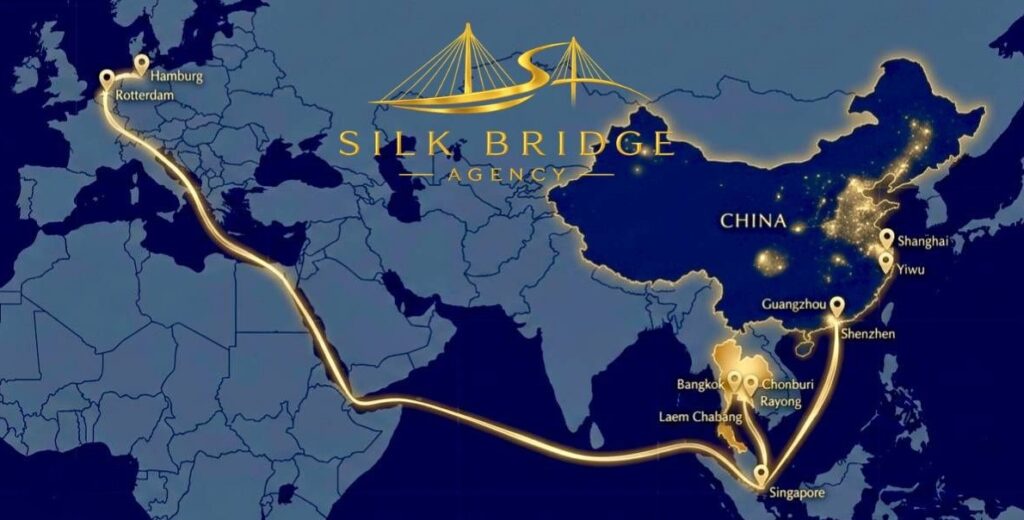

Helping businesses across Europe and the United States source products from China and Thailand with confidence.
Helping businesses across Europe and the United States source products from China and Thailand with confidence.
Contact:
We typically respond within 24 hours.
Where We Are