
Why more and more companies are choosing Thailand as an alternative or complement to China
Introduction
When we think about importing from Asia, China is usually the first country that comes to mind. For many years, it has been almost unrivalled as the world’s manufacturing hub, offering a vast network of suppliers, competitive prices, and the ability to manufacture almost any type of product.
In recent years, however, global trade has been changing rapidly. Rising production costs, geopolitical tensions, disruptions to global supply chains, and the experience of the pandemic have encouraged an increasing number of companies to actively explore alternative sourcing destinations. This trend, known as supply chain diversification, has become one of the most important strategies used by importers around the world.
One of the countries that has gained particular importance is Thailand. Although many people primarily associate Thailand with tourism, it is in fact one of the most developed industrial centres in Southeast Asia. For years, the country has exported products to Europe, the United States, Japan, and Australia, while its economy is supported by modern manufacturing, well-developed agriculture, and a strong export sector.
Thailand is not, and is unlikely ever to be, a universal replacement for China. In many industries, China remains the global leader. There are, however, product categories in which Thailand can offer higher quality, greater specialization, or more favourable conditions for cooperation.
That is why more and more entrepreneurs are no longer asking: “China or Thailand?” Instead, they are asking: “Which products are better sourced from China, and which from Thailand?”
In this article, we will explore the industries in which Thailand is particularly strong, which products currently offer the greatest import potential, and what to consider when searching for manufacturers and organizing imports.
1. Why Are More and More Companies Importing from Thailand?
Just a few years ago, Thailand was a relatively unfamiliar sourcing destination for many European importers. Today, the situation looks completely different. The country has become one of the most important manufacturers and exporters in Southeast Asia, and its importance in global trade continues to grow.
Several important factors are driving the growing interest in Thailand.
First and foremost, the country has a well-developed economy and modern industrial infrastructure. Global automotive, electronics, and food companies operate in many sectors, while local manufacturers have been working with customers from Europe and North America for many years. This experience translates into a high level of production organization and strong preparation for serving demanding international customers.
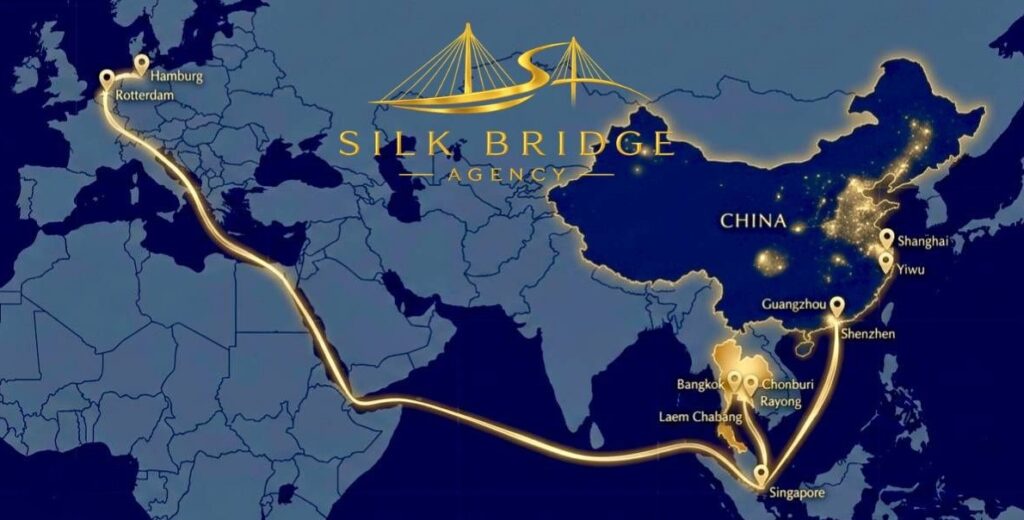
Another major advantage is Thailand’s geographical location. The country is located at the heart of the ASEAN region and has highly developed logistics infrastructure. One of its most important assets is Laem Chabang Port, the country’s largest container port and one of the largest cargo-handling facilities in Southeast Asia. A significant share of Thailand’s exports to global markets is shipped from here.
The long-standing export experience of Thai manufacturers is also worth highlighting. In many industries, they supply products to some of the world’s most demanding markets and are therefore familiar with applicable quality standards, technical requirements, and the expectations of customers from Europe.
Supply chain diversification, mentioned earlier, is also becoming increasingly important. Many companies no longer want to depend entirely on a single country for their production. Expanding cooperation to Thailand can help reduce risk, increase flexibility, and better protect supply continuity.
Business culture is another factor worth considering. Many importers appreciate the professionalism of Thai manufacturers, good communication, and their strong focus on building long-term business relationships.
This does not mean, however, that Thailand is inherently a better sourcing destination than China. Both countries have different areas of specialization and different strengths. The key to successful sourcing is choosing the right production location for the specific product and the needs of the business.
2. Which Industries Is Thailand Particularly Strong In?
Although Thailand does not have the same enormous manufacturing capacity as China, it is a global leader in many sectors. Its specialization means that, in certain industries, sourcing from Thailand may prove more cost-effective or provide higher product quality than sourcing from other Asian countries.
One of the country’s best-known sectors is the automotive industry. Thailand has been referred to for many years as the “Detroit of Asia”, as it is home to one of the world’s largest production bases for vehicles and automotive components. Companies such as Toyota, Honda, Isuzu, Mitsubishi, Nissan, and Ford have manufacturing operations there, supported by thousands of component and aftermarket parts manufacturers.
Another exceptionally strong sector is the food industry. Thailand is one of the world’s largest exporters of rice, tropical fruits, coconut products, canned foods, spices, and processed food. Thai products are highly regarded in international markets thanks to the quality of local raw materials and manufacturers’ extensive experience.
The rubber industry is also of major importance. Thailand is one of the world’s largest producers of natural rubber, which has contributed to the development of a strong manufacturing sector producing gloves, seals, technical components, and many other rubber products used across a wide range of industries.
Furniture and wooden products are also worth considering, particularly products made from teak, which has long been valued for its exceptional durability, moisture resistance, and elegant appearance. Thailand is also a recognized supplier of furniture and equipment for hotels, restaurants, and SPA facilities.
The natural cosmetics and SPA products sector is developing rapidly as well. The use of locally sourced ingredients such as coconut oil, aloe vera, herbs, and natural plant extracts is helping Thai cosmetics gain increasing popularity in European markets.
In recent years, eco-friendly products made from bamboo, wood, natural fibres, and other environmentally friendly materials have also become increasingly important. Growing interest in sustainability means that this product category is now one of Thailand’s most promising export sectors.
These industries demonstrate where Thailand has particular strengths. For an entrepreneur planning to import, however, the most important question is which specific products currently offer the greatest sales potential in Europe. That is the subject of the next section.
3. Which Products Currently Have the Greatest Import Potential?
Thailand does not compete with China in terms of the sheer number of products manufactured or overall production scale. Its greatest advantage lies in specialization and extensive experience in selected industries. For this reason, it is worth focusing on products where Thai manufacturers offer high quality, access to local raw materials, or unique know-how.
Below are product categories that currently attract significant interest from European importers.
Natural Cosmetics and SPA Products
This is one of Thailand’s most recognized areas of specialization. The country has been known for many years for producing cosmetics based on natural ingredients such as coconut oil, aloe vera, turmeric, lemongrass, and extracts from local plants.
The growing popularity of natural cosmetics means that products from Thailand are increasingly finding their way into online stores, beauty salons, hotels, and SPA facilities across Europe.
Coconut Products
Thailand is one of the world’s largest producers of coconut-based products. Importers source products such as:
coconut oil,
coconut milk,
coconut water,
coconut sugar,
activated charcoal made from coconut shells,
accessories made from coconut shells.
Growing interest in healthy food and environmentally friendly products is driving steadily increasing demand for this category.
Teak Furniture and Wooden Products
Teak has long been regarded as one of the most durable types of wood in the world. It is highly resistant to moisture, changing weather conditions, and offers an elegant appearance.
For this reason, furniture and interior products made from teak are in demand among both individual customers and the hospitality and HoReCa sectors.
Eco-Friendly Bamboo Products
As consumers move away from single-use plastic products, demand for products made from natural materials is growing rapidly.
Some of the most commonly imported products include:
bamboo cutlery,
toothbrushes,
cups and straws,
kitchen accessories,
homeware.
Growing environmental awareness among European consumers gives this segment very strong growth potential.
Premium Food Products
Thailand has been one of Asia’s leading food exporters for many years.
Products with particularly strong potential include:
spices and sauces,
jasmine rice,
dried fruit,
canned foods,
Asian food products,
coconut products.
For many importers, one of the biggest advantages is the ability to offer customers authentic products sourced directly from their country of origin.
Rubber Products
Natural rubber is one of Thailand’s most important export commodities. As a result, the country specializes in manufacturing products such as:
gloves,
seals,
technical components,
industrial parts,
medical products.
This is a particularly interesting sector for importers operating in manufacturing, the automotive industry, and the medical sector.
Automotive Parts
The presence of the world’s largest automotive manufacturers has led to the development of thousands of companies producing parts and components around Thailand’s automotive industry.
For European importers, this means access to manufacturers with many years of experience and production processes aligned with international quality standards.
Of course, these are not the only products worth importing from Thailand. Every project should be assessed individually, taking into account market size, competition, transportation costs, legal requirements, and the expectations of end customers.
4. Which Products Are Not Always Cost-Effective to Import from Thailand?
Although Thailand offers many interesting sourcing opportunities, this does not mean that every product will be a good choice.
One of the most common mistakes made by inexperienced importers is assuming that if a product can be purchased in Thailand, importing it will automatically be profitable.
In practice, many product categories are still significantly more cost-effective to source from China. These include, in particular:
low-cost consumer electronics,
simple mass-produced plastic products,
inexpensive promotional gadgets,
products requiring very large production runs,
products with extremely low margins.
In these segments, China still has a significant advantage due to its scale of production, extensive industrial infrastructure, and highly competitive costs.
Thailand, on the other hand, tends to perform particularly well with higher-quality products, products with greater added value, and goods that make use of local raw materials and specialized technologies.
Therefore, before starting an import project, it is worth asking not:
“Which country should I source from?”
but rather:
“Which country is the best place to manufacture my specific product?”
This approach can help avoid many costly mistakes already at the import-planning stage.
5. What Should You Pay Attention to When Importing from Thailand?
Although importing from Thailand is similar in many respects to importing from China, there are several issues that deserve particular attention.
The first is choosing the right manufacturer. As in any other country, Thailand is home to both highly professional factories and companies that lack sufficient export experience. Before starting cooperation, it is therefore important to verify the manufacturer, review its documentation and business history, and assess its actual production capabilities.
The second crucial element is quality control. Even the best manufacturers can make mistakes, which is why larger orders should be subject to an independent inspection before the goods are shipped.
Samples and the Golden Sample should not be overlooked either. Approving a reference sample significantly reduces the risk of misunderstandings regarding product quality, materials, or finishing.
It is also important to take cultural differences into account. Thai businesspeople place considerable importance on building long-term business relationships. Polite communication, patience, and mutual respect can often be just as important as the commercial terms themselves.
Before starting an import project, you should also make sure that the products meet all requirements applicable to the European market. Depending on the type of goods, appropriate certifications, markings, or technical documentation may be required.
Finally, it is worth remembering one important principle: in importing, finding the cheapest manufacturer is not the most important thing. Far more important is finding a partner capable of consistently delivering high-quality products, meeting agreed deadlines, and developing the relationship as your business grows.
6. How to Find a Reliable Manufacturer in Thailand?
Finding the right manufacturer is one of the most important stages of the entire import process. Even the most promising product category will not deliver the expected results if your business partner is unreliable, unprepared for international exports, or unable to maintain consistent quality.
In Thailand, just as in China, it is worth using several sources when looking for potential manufacturers.
Industry Trade Fairs
Direct meetings with manufacturers remain one of the most effective ways to establish business relationships. Trade fairs allow you to examine product samples, assess a company’s level of professionalism, and compare offers from multiple manufacturers in one place.
Recommendations and Trusted Contacts
Recommendations from other importers or companies operating in the same industry can be particularly valuable. They can significantly shorten the supplier selection process and reduce the risk of choosing the wrong business partner.
Official Institutions and Platforms
It is worth using resources such as Thai Trade, the Board of Investment of Thailand (BOI), and local exporter databases. These platforms can help you identify companies that are genuinely engaged in international trade and meet established business standards.
Online Research
Google, LinkedIn, and specialist B2B platforms can also be valuable sources of information. However, it is important to remember that a professional website or an active social media profile does not, by itself, confirm that a manufacturer is reliable.
Once potential suppliers have been identified, they should be thoroughly verified. This should include checking company registration documents, business history, actual production capabilities, and experience in exporting to international markets. In many cases, it is also advisable to order samples, conduct a factory audit, or arrange an independent quality inspection.
The most important principle remains the same as when importing from China:
There is little value in simply looking for the cheapest manufacturer. It is far more important to find a stable and reliable business partner capable of consistently delivering quality products over the long term.
7. China or Thailand? Or Both?
More and more importers are considering which sourcing destination is better for their business — China or Thailand. In practice, there is no single answer, because the two countries specialize in different areas of manufacturing and offer different advantages.
If large-scale production is the primary consideration, China remains the global leader. Its enormous number of factories and highly developed industrial infrastructure make it possible to handle everything from relatively small orders to production runs involving millions of units.
Thailand also has a modern industrial sector, but its manufacturing base is more specialized. Rather than competing with China purely on volume, Thailand focuses on industries where quality, experience, and access to local raw materials are particularly important.
The differences are also visible in the countries’ strongest industries. China remains exceptionally strong in electronics, mass production, industrial components, and the broader OEM and ODM sectors. Thailand, on the other hand, stands out in food production, natural cosmetics, SPA products, rubber products, teak furniture, and automotive components.
In terms of production costs, China often continues to offer lower unit prices, particularly for large production volumes. Thailand can be somewhat more expensive, but in many product categories, the higher price is accompanied by better workmanship, greater attention to detail, and more consistent production quality.
For businesses planning to develop their own private-label products, both countries offer extensive OEM and ODM opportunities. China has greater experience in this area and offers exceptional flexibility, while Thai manufacturers are increasingly producing private-label products, particularly in the premium segment.
Access to local raw materials is another important factor. In China, many materials are sourced from other regions of the world. Thailand, by contrast, has a natural advantage in products based on rubber, coconut, teak wood, bamboo, herbs, and tropical fruits. This can often translate into higher quality and greater competitiveness in these specific categories.
Risk management should also be taken into account. Companies that rely entirely on one country for their production are more exposed to the effects of political changes, logistical problems, and disruptions to global supply chains. For this reason, an increasing number of businesses are choosing to diversify their sourcing and take advantage of both markets simultaneously.
The key takeaway is simple: businesses are increasingly moving away from the question “China or Thailand?” and towards building sourcing strategies that use both countries, taking advantage of the strengths of each. This approach makes it possible to match the production location more effectively to the specific product, improve supply chain resilience, and reduce overall business risk.
8. Frequently Asked Questions (FAQ)
Is importing from Thailand more expensive than importing from China?
In many cases, yes, particularly for mass-produced products. However, in industries where Thailand has a strong specialization — such as food, natural products, furniture, and automotive components — the higher price often comes with better quality and greater supply stability.
What products are currently most profitable to import from Thailand?
The greatest potential can be found in natural cosmetics and SPA products, coconut-based products, teak furniture, bamboo products, premium food products, rubber products, and automotive components.
How long does shipping from Thailand to Europe take?
Sea freight typically takes between 25 and 40 days, depending on the port of loading, destination port, and the current logistics situation. Air freight is significantly faster, but also considerably more expensive.
Are special certifications required?
Yes. Depending on the type of product, specific certifications or compliance with European Union requirements may be necessary, including CE, RoHS, REACH, and appropriate certifications for food products. These requirements should be verified before placing an order.
Is it worth working with an intermediary?
This depends on the importer’s experience and the scale of the project. A reliable local partner can significantly simplify the process of finding and verifying manufacturers, negotiating terms, conducting quality inspections, and organizing the entire import process — particularly for first-time orders.
How can I find a reliable manufacturer?
The best approach is to use several sources simultaneously: industry trade fairs, recommendations, official platforms such as Thai Trade and BOI, online research, followed by thorough verification of company documents and production capabilities.
Is Thailand a safe sourcing destination?
Yes. When basic risk-management measures are followed — including manufacturer verification, quality inspections, and appropriate transaction safeguards — Thailand is considered one of the more reliable sourcing destinations in Southeast Asia.
Can I order product samples?
Yes, and it is highly recommended. Ordering samples and approving a so-called Golden Sample can significantly reduce the risk of later misunderstandings regarding product quality, materials, or finishing.
Can products be manufactured under my own brand (OEM/ODM)?
Yes. Many Thai manufacturers offer OEM and ODM production, particularly in the cosmetics, food, furniture, and automotive industries.
What does quality control look like in Thailand?
The process is very similar to China. You can arrange an independent Pre-Shipment Inspection, an inspection during production, or supervision of the container loading process.
9. Conclusion
Just a few years ago, most importers focused almost exclusively on China. Today, global trade looks very different. An increasing number of companies are deliberately building supply chains across multiple countries, reducing risk and increasing the flexibility of their businesses.
Thailand has become one of the most interesting sourcing destinations in Southeast Asia. Not because it always offers the lowest prices, but because in many industries it provides high-quality manufacturing, specialized production capabilities, and extensive experience serving demanding international markets.
Thailand’s greatest potential can be seen particularly in sectors such as automotive manufacturing, premium food products, natural cosmetics, teak wood products, coconut-based products, rubber products, and environmentally friendly goods made from bamboo. These are the areas where Thai manufacturers can often offer advantages in quality, access to local raw materials, and high production standards.
At the same time, it is important to remember that successful importing depends on more than simply choosing the right country. Reliable manufacturer verification, a precisely prepared product specification, quality control, and well-planned logistics are equally important. Only by combining these elements can businesses effectively reduce risk and build stable, long-term relationships with suppliers.
Today, businesses are increasingly moving away from the question “China or Thailand?” and asking instead: “Which country is the right manufacturing destination for my particular product?” In many cases, the best solution is to deliberately leverage the strengths of both markets and diversify sourcing across multiple countries.
Key Takeaways
Thailand is one of the most important exporters in Southeast Asia and is playing an increasingly significant role in global trade.
Not every product is best sourced from China — in many industries, Thailand offers genuine advantages in quality and specialization.
Products with particularly strong import potential include natural, food, cosmetic, furniture, rubber, and automotive products.
Reliable manufacturer verification, quality control, and proper preparation of the entire import process remain essential to safe sourcing.
An increasing number of companies are combining sourcing from China and Thailand, deliberately diversifying their supply chains and reducing business risk.
Planning to import from Thailand?
Not sure whether your chosen product is best sourced from Thailand? Or perhaps you are looking for a reliable manufacturer and want to reduce risk from the very beginning of the relationship?
Silk Bridge Agency supports businesses throughout the entire import process from Thailand — from finding and verifying manufacturers, through negotiations, quality control, and production supervision, to organizing transportation to Europe.
With local presence and practical experience, we help businesses make decisions based on reliable information rather than manufacturers’ claims alone.
Contact us to find out whether Thailand is the right sourcing destination for your import project. Together, we can assess its potential and help you choose the solution that best fits your business needs.
Looking for a Trusted Partner in Asia?
Looking for a Trusted Partner in Asia?
Planning to import from China or Thailand? We can help you find the right manufacturer, verify suppliers and safely manage the entire import process.
Let’s talk about your project.
Planning to import from China or Thailand? We can help you find the right manufacturer, verify suppliers and safely manage the entire import process.
Let’s talk about your project.

Helping businesses across Europe and the United States source products from China and Thailand with confidence.
Helping businesses across Europe and the United States source products from China and Thailand with confidence.
Contact:
We typically respond within 24 hours.
Where We Are