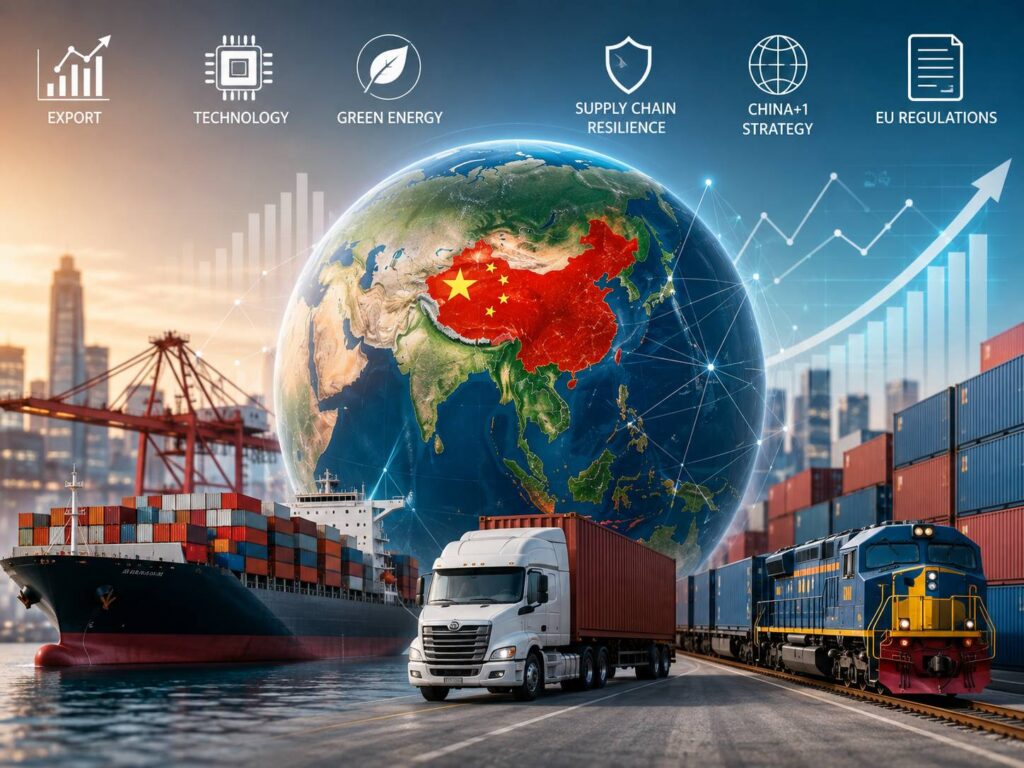
What Is Currently Changing in Imports from China?
The Key Trends Entrepreneurs Should Know in 2026
Introduction
Imports from China in mid-2026 look different than they did just a few years ago. Chinese exports are reaching record levels — in June 2026, they increased by 27% year-on-year, reaching a historic level of USD 412.39 billion. In the first half of the year, growth reached 17.6%.
At the same time, the legal and economic environment is changing. On July 1, 2026, the European Union abolished the exemption for shipments valued at up to EUR 150 and introduced a flat administrative fee. Requirements concerning product safety, regulatory compliance, and supply chain resilience are also increasing.
For entrepreneurs, this means one thing — importing from China remains highly attractive, but making the right decisions now requires a much better understanding of the market than it did just a few years ago.
Chinese Exports: Record Levels and a Changing Structure
China remains the world's largest exporter, but its competitive advantage is no longer based solely on low production costs.
The fastest-growing sectors currently include:
semiconductors,
electronics,
artificial intelligence,
industrial automation,
electric vehicles,
lithium batteries,
green energy technologies.
Mechanical and electrical products now account for more than 60% of the value of Chinese exports. At the same time, the share of basic products competing primarily on low price is declining.
What does this mean for importers?
Increasingly, competitive advantage is built not on the lowest purchase price, but on access to modern technologies, high-quality manufacturing, and manufacturers with the appropriate expertise and experience.
New EU Customs Regulations — One of the Most Important Changes of 2026
One of the most noticeable changes for importers and e-commerce businesses is the new legislation introduced in the European Union.
From July 1, 2026, new rules concerning shipments valued below EUR 150 began to be implemented.
For many years, millions of small parcels entered Europe with virtually no additional charges.
According to data from the European Commission, around 13 million such shipments arrived in EU countries every day.
These shipments are now subject to a flat administrative fee, significantly changing the economics of purchases made directly through platforms such as Temu, Shein, and AliExpress.
In practice, this means:
a smaller price advantage for direct-to-consumer sales,
greater competitiveness for European importers,
greater importance of local warehouses,
growing importance of professional container-based imports.
What does this mean for importers?
For companies building their own brands, this is a positive change. The gap between consumers independently importing individual products and professional importing is becoming increasingly smaller.
Production Costs — It Is No Longer “Cheap at Any Cost”
Labor costs in China have been increasing for many years.
Energy and raw material prices are also rising, as are the costs of meeting increasingly strict environmental standards.
At the same time, Chinese factories are investing heavily in:
robotics,
automation,
AI systems,
AI-based quality control,
smart warehouses.
As a result, the productivity of many manufacturing facilities has increased faster than labor costs themselves.
What does this mean for importers?
The product price is no longer the only criterion for evaluation.
The following factors are becoming increasingly important:
quality consistency,
delivery reliability,
production scalability,
compliance with the requirements of the European market.
Based on the experience of Silk Bridge Agency, entrepreneurs lose money far more often because they fail to properly assess the total cost of importing than because of the product price itself. Analyzing all costs and risks is what makes it possible to make better purchasing decisions.
Industries with the Greatest Potential
The strongest growth is currently being seen in the following sectors:
electronics,
artificial intelligence,
industrial automation,
electromobility,
energy storage,
industrial components,
advanced machinery,
industrial equipment.
These are also industries that require significantly more expertise when selecting manufacturers, conducting quality inspections, and handling certification requirements.
What does this mean for importers?
The greatest growth potential today lies in products offering high added value rather than simply the lowest price.
China+1 — Diversification Instead of Abandoning China
One of the most important trends of recent years is the China+1 strategy.
It involves maintaining production in China while simultaneously developing a second sourcing destination.
The most commonly selected countries include:
Thailand,
Vietnam,
India,
Malaysia.
However, this does not mean the end of China's dominance.
Quite the opposite.
Most companies continue to maintain their main production in China, using a second country primarily as protection against potential risks.
What does this mean for importers?
Diversification increases business security, but it does not replace well-established relationships with a trusted manufacturer in China.
The Growing Importance of Supply Chain Resilience
Just a few years ago, the main question was:
“Where can we buy at the lowest price?”
Today, entrepreneurs are increasingly asking:
“Which manufacturer will still be able to supply us one or two years from now?”
The COVID-19 pandemic, geopolitical tensions, and disruptions in transportation have shown that supply chain resilience has become one of the most important elements of building a competitive advantage.
Companies are increasingly choosing manufacturers that can guarantee stable cooperation, even if their prices are slightly higher.
Outlook for the Coming Months
In the second half of 2026, we can expect further development of:
automation,
the use of AI in manufacturing,
green technologies,
stricter EU regulatory requirements,
China+1 strategies.
Sea freight should remain relatively stable, although it will continue to be vulnerable to geopolitical events.
The greatest advantage will be gained by companies that can quickly adapt their sourcing strategies to changing circumstances.
Key Takeaways
China remains the global manufacturing leader, but today it competes primarily through technology, quality, and scale.
New EU regulations are changing the economics of small direct purchases and strengthening the importance of professional importing.
The total cost of importing is becoming more important than the purchase price alone.
Supply chain resilience and diversification of sourcing are becoming increasingly important.
The greatest growth opportunities currently lie in industries related to AI, automation, electromobility, and green energy.
Companies that regularly analyze market developments and adjust their strategies early can build a lasting competitive advantage.
Want to know how current changes could affect your imports?
Contact the Silk Bridge Agency team.
We can help you analyze the current market situation, assess the profitability of your planned import, and identify solutions best suited to the specific needs of your business.
Looking for a Trusted Partner in Asia?
Looking for a Trusted Partner in Asia?
Planning to import from China or Thailand? We can help you find the right manufacturer, verify suppliers and safely manage the entire import process.
Let’s talk about your project.
Planning to import from China or Thailand? We can help you find the right manufacturer, verify suppliers and safely manage the entire import process.
Let’s talk about your project.
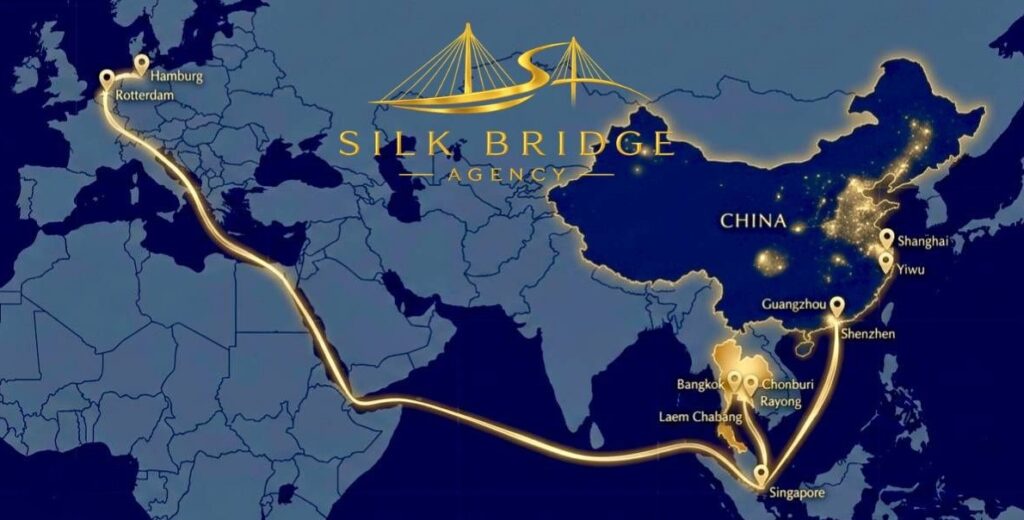
Helping businesses across Europe and the United States source products from China and Thailand with confidence.
Helping businesses across Europe and the United States source products from China and Thailand with confidence.
Contact:
We typically respond within 24 hours.
Where We Are