Silk Bridge Journal
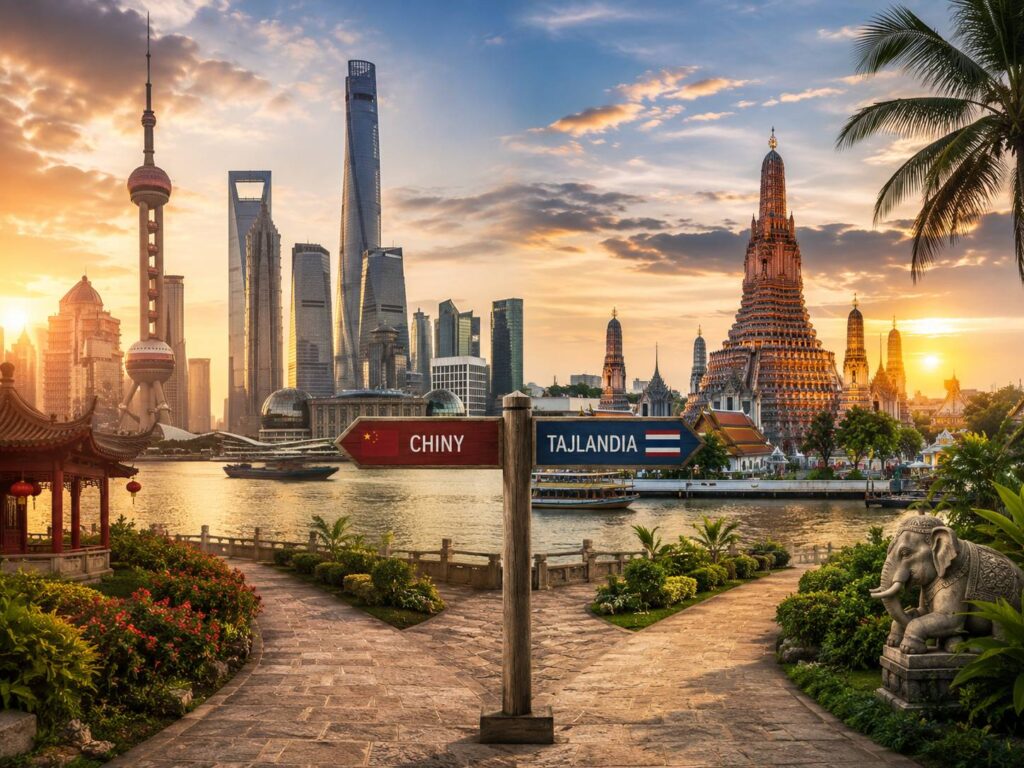
China or Thailand — which country offers the better import opportunity?
There is no single best sourcing destination.
Everything depends on the product, your company’s strategy, and your business objectives.
Introduction
Just a few years ago, most entrepreneurs planning to import goods were asking themselves one question: “How can I find a reliable manufacturer in China?” Today, the question is increasingly different: “Is China still the best sourcing destination, or should I also consider Thailand?”
This shift is not accidental. Rising production costs, the growing need to diversify supply chains, and the rapid development of Southeast Asian economies have made Thailand a viable alternative for many industries. More and more importers are consciously comparing the two markets in search of the best location to manufacture their products.
However, the biggest mistake is trying to answer the question: “Which country is better?” In reality, there is no universally best sourcing destination. What may be an ideal solution for an electronics manufacturer may not necessarily be the right choice for natural cosmetics, furniture, or food products.
A much more relevant question is: “Which country is best suited to my product, business model, and customers’ expectations?”
In this article, we will compare China and Thailand in terms of costs, quality, logistics, communication, and the strengths of different industries. This will make it easier to assess which sourcing destination best matches the requirements of your specific project.
1. China and Thailand – Two Completely Different Manufacturing Models
Although China and Thailand are located in the same region of the world, their economies have developed in very different ways. Understanding these differences is essential for any entrepreneur planning to import, as it allows them to consciously choose the country best suited to a specific product.
Over the past several decades, China has established itself as the world’s largest manufacturing hub. Its enormous number of factories, highly developed industrial infrastructure, and ability to manufacture almost every type of product have earned it the reputation of the “world’s factory.” In many industries, importers can choose from hundreds or even thousands of manufacturers offering similar products. The market is dominated by companies focused on mass production, high efficiency, and very large production volumes.
Thailand has followed a different development path. Rather than competing with China across every sector, it has focused on industries where it could establish a strong international position. As a result, Thailand has become one of the world’s leading producers of food products, rubber goods, automotive components, natural cosmetics, and products based on locally sourced raw materials. The country is more likely to have specialized manufacturers that build their competitive advantage through quality, experience, and in-depth knowledge of a particular industry.
This does not mean that one country is better than the other. Each has its own strengths and is best suited to different areas. The choice of manufacturing location should therefore primarily depend on the type of product, the expected level of quality, the planned order volume, and the company’s long-term strategy.
The biggest mistake is to make decisions based solely on common assumptions or the experiences of other importers. What worked well for one project may not necessarily be the best solution for the next.
2. Import Costs – Why the Lowest Price Does Not Always Mean the Highest Profit
One of the first questions entrepreneurs planning an import ask is: “Which country will be cheaper?” Although this is a perfectly natural question, it is important to remember that the purchase price of a product represents only one part of the total cost of importing.
In many market segments, Chinese manufacturers still offer highly competitive unit prices. This is largely due to enormous production volumes, a high level of automation, and an extensive network of component suppliers. In mass production, China often remains unmatched in terms of manufacturing costs.
The situation is different in industries that require high-quality workmanship, specialized raw materials, or greater production precision. In such cases, products from Thailand may be more expensive at the purchasing stage, but they may also generate significantly fewer problems during subsequent sales. Fewer complaints, returns, or quality defects can often translate into lower overall project costs.
For this reason, experienced importers analyze not only the price stated in the quotation, but all expenses associated with fulfilling the order. Customer complaints, replacement of defective products, delays, and quality issues often turn out to be far more costly than a small difference in the initial purchase price.
In practice, the concept of Total Landed Cost is increasingly being used. It refers to the total cost of importing a product and includes not only the value of the order, but also transportation, insurance, customs duties, taxes, warehousing, quality control, and costs resulting from potential manufacturing defects.
For this reason, the cheapest quotation very rarely turns out to be the best choice. A manufacturer capable of consistently delivering products of stable quality, in accordance with agreed specifications and within the agreed timeframe, provides significantly greater value.
Ultimately, the profitability of an import operation is not determined by the lowest purchase price, but by the total cost of delivering the product to the end customer and its actual quality.
3. Minimum Order Quantities (MOQ)
One of the most important parameters when planning an import is MOQ (Minimum Order Quantity), meaning the minimum quantity of a product that a manufacturer is willing to produce or sell as part of a single order.
For first-time importers, this factor often proves to be a greater challenge than the price itself. Even a very attractive quotation may be difficult to pursue if the manufacturer requires an order consisting of tens or hundreds of thousands of units.
In China, minimum order quantities are often closely linked to mass production. Large factories design their processes to achieve maximum efficiency at high production volumes. As a result, smaller orders may not always be commercially attractive to them, particularly when products are manufactured under a customer’s own brand or according to an individual specification. For large production runs, however, economies of scale allow Chinese manufacturers to offer highly competitive prices.
The situation in Thailand can be more diverse. In many industries — particularly those involving premium products, natural cosmetics, interior furnishings, or food — manufacturers are often more flexible and willing to produce smaller batches. This is not, however, a universal rule across all sectors. MOQ always depends on the individual company, the type of product, and the level of customization required.
The minimum order quantity can also be influenced by production setup costs, tooling and mold costs, raw materials, and packaging requirements. This is why two manufacturers offering very similar products may have completely different minimum order requirements.
The good news is that MOQ is often negotiable. Particularly at the beginning of a business relationship, it is worth presenting the manufacturer with your growth plans and asking whether a smaller trial batch would be possible. Many suppliers are willing to compromise if they see the potential for long-term cooperation.
For entrepreneurs starting to import, the ability to order a smaller quantity of goods can often be more valuable than obtaining the lowest possible unit price. It allows them to reduce risk, verify product quality, and test market demand before placing larger orders.
4. Product Quality – What Does It Really Depend On?
One of the most common myths surrounding imports is the belief that products from one country are inherently better or worse than products from another. In reality, the situation is considerably more complex.
For many years, the term “Chinese quality” was associated with low-grade products. Today, this way of thinking is outdated. China manufactures everything from some of the cheapest goods available on the market to premium products for some of the world’s most recognizable brands. Final product quality is not determined by the country of origin, but by the specific manufacturer, the materials used, the technology employed, and the requirements set by the buyer.
The situation is similar in Thailand. The country is known for high-quality manufacturing in many specialized industries, including natural cosmetics, premium food products, automotive components, and teak wood products. This does not mean, however, that every manufacturer offers the same level of workmanship. Here too, there are companies operating according to international standards as well as businesses that are not adequately prepared to work with demanding customers from Europe.
This is why clearly defining expectations before production begins is so important. The more precise the product specification, the lower the risk of misunderstandings. It is worth describing in detail the materials, dimensions, colors, finishing requirements, tolerances, and all other parameters that may affect the quality of the finished product.
Another highly important element is the preparation and approval of a Golden Sample — a reference product sample. It serves as a benchmark for the entire production run and allows both parties to clearly define the expected final result. The absence of an approved reference sample is one of the most common causes of later disputes regarding product quality.
Even the best-prepared documentation cannot replace quality control. An independent inspection carried out before shipment makes it possible to identify potential non-conformities at a stage when correcting them is relatively straightforward and significantly less expensive than dealing with complaints after the goods have arrived in Europe.
Ultimately, there is no such thing as “Chinese quality” or “Thai quality.” There is the quality of a specific manufacturer and the effectiveness of the entire quality management process. These are the factors that have the greatest impact on the success of an import project.
5. Lead Times, Transportation and Logistics
When planning an import, many entrepreneurs focus primarily on the product price, forgetting that lead time is equally important. Even a highly attractive quotation can prove to be of little value if the manufacturer is unable to deliver the goods within the required timeframe.
The total lead time consists of two main stages: production and transportation. Production time depends primarily on the type of product, order volume, level of complexity, and the factory’s current workload. Both in China and Thailand, lead times can vary significantly between individual manufacturers.
Once production is completed, the transportation stage begins. For larger orders, sea freight is usually the most common option, as it remains the most economical solution. Both China and Thailand have modern container ports serving routes to Europe. In China, the ports of Shanghai and Ningbo play particularly important roles, while Thailand’s most important export port is Laem Chabang.
When time is critical, air freight can be used. It can reduce delivery times to just a few days, but it also involves significantly higher costs. For this reason, it is primarily used for high-value or relatively small and lightweight products.
Lead times can also be affected by external factors. Production seasonality, public holidays, weather conditions, and the current state of global logistics can all cause delays regardless of the manufacturer. In China, the Chinese New Year is particularly important, while in Thailand it is worth taking local holidays into account and, in some industries, considering the impact of the rainy season.
For this reason, experienced importers plan orders well in advance and leave an appropriate safety margin for unforeseen circumstances.
Contrary to common assumptions, the differences between China and Thailand in terms of delivery times to Europe are generally not significant. In practice, the organization of the manufacturer’s operations, the quality of communication, and the efficiency of the entire logistics process often have a much greater impact on delivery times than the country of production itself.
6. Communication and Business Culture
Successful importing is not only about the right price, high quality, or timely delivery. Day-to-day communication with the manufacturer is equally important, as it often determines how efficiently problems can be resolved and how smoothly the entire project is carried out.
Chinese manufacturers have been working with customers from around the world for many years. Larger companies generally have specialized export departments, which means communication can be fast and professional. At the same time, the Chinese market is extremely competitive, and manufacturers often manage multiple projects simultaneously. This can affect response times and the level of individual attention given to each customer. Negotiations typically focus on price, order volume, and payment terms.
In Thailand, business relationships tend to have a somewhat different character. Mutual respect, courtesy, and the development of long-term trust are highly valued. The initial stages of cooperation may progress more slowly than in China, but once good relationships have been established, many importers appreciate the stability and predictability of working with Thai partners. Negotiations are generally less dynamic, with greater emphasis placed on building lasting business relationships.
Regardless of the country, however, the same principle applies: the more precise the communication, the lower the risk of misunderstandings. A clearly prepared product specification, written confirmation of all agreements, and regular communication significantly increase the chances of successful order fulfillment.
The way a manufacturer responds to problems is equally important. It is often their approach to complaints, design changes, and unforeseen circumstances that best reveals whether they are genuinely committed to a long-term business relationship.
In practice, the success of an import operation is often determined not by price or lead time, but by the quality of cooperation between the importer and the manufacturer. Good communication, mutual trust, and clearly defined terms of cooperation can often deliver significantly greater benefits than simply securing a slightly lower purchase price.
7. Which Industries Are Better Suited to China?
Despite the growing importance of other Asian countries, China remains the world’s largest manufacturing hub. In many industries, its advantage is so significant that choosing another sourcing destination would be difficult to justify from both an economic and operational perspective.
China’s greatest strength remains mass production. The enormous number of factories, extensive supplier network, and high level of specialization make it possible to manufacture very large quantities of goods quickly and at competitive unit costs. This is why China remains the natural choice for companies planning to sell on a large scale.
Another area in which China has maintained its position as a global leader for many years is electronics and electronic components. Smartphones, computer accessories, consumer electronics and household appliances, LED lighting, and electronic components are all sectors in which Chinese industry has an exceptionally well-developed manufacturing infrastructure. Access to a complete supply chain allows manufacturers to respond quickly to market demand and offer an extremely wide range of solutions.
China also remains the preferred destination for entrepreneurs looking for promotional products, simple plastic goods, and products with a low unit value. In these segments, production scale plays a decisive role, allowing manufacturers to significantly reduce costs.
Another major strength of the Chinese market is machinery, industrial equipment, and production machinery. Importers can choose from a wide range of manufacturers offering similar solutions across different price and quality levels.
The enormous opportunities for private-label manufacturing (OEM and ODM) should not be overlooked either. In many industries, Chinese factories have decades of experience designing and manufacturing products according to the requirements of customers from around the world.
If the primary objective is to achieve the lowest possible unit cost at high order volumes, China remains the global leader.
8. Which Industries Are Better Suited to Thailand?
Although Thailand does not offer the same breadth of manufacturing capabilities as China, it has a significant advantage in many industries due to decades of specialization, access to local raw materials, and high manufacturing standards.
One of the country’s best-known sectors is natural cosmetics and SPA products. Thailand has been making use of its abundance of local plants, oils, and extracts for many years, and its products are valued by both consumers and professional beauty salons and hotels.
Another major strength is premium food and coconut-based products. Jasmine rice, coconut milk, coconut oil, spices, sauces, and dried fruits have long been among Thailand’s most recognizable exports. For importers, an important advantage is the ability to offer authentic products sourced directly from their country of origin.
Furniture and teak wood products are also highly regarded. Thanks to the exceptional properties of teak, these products are used in private homes as well as hotels, restaurants, and resort properties.
Thailand also plays an important role in the production of rubber products and technical components. As one of the world’s largest producers of natural rubber, the country offers a wide range of products used in industry, automotive manufacturing, and the medical sector.
The automotive industry should not be overlooked either. The presence of major global vehicle manufacturers has led to the development of thousands of companies producing high-quality parts and components that comply with international standards.
Eco-friendly products made from bamboo and other natural materials are also attracting growing interest. Increasing consumer awareness of environmental issues is driving rapid growth in this segment and creating more opportunities for importers.
Thailand is particularly well suited to industries where high-quality workmanship, locally sourced materials, manufacturer specialization, and product value are more important than simply achieving the lowest possible price.
In practice, the question is therefore not which country is “better,” but which one is better suited to the requirements of a specific product and the expectations of its target market.
9. Is Choosing a Single Country Really the Best Solution?
Just a decade or so ago, many companies based their entire import operations on a single market. Today, more and more businesses are moving away from this model and deliberately diversifying their sources of supply.
There are several reasons for this. Relying on a single country for all production increases exposure to risks associated with logistical problems, regulatory changes, geopolitical tensions, and disruptions to global supply chains. The events of recent years have clearly demonstrated that even short-term disruptions can have a significant impact on business operations, causing delays, higher costs, and problems with product availability.
For this reason, more and more importers are taking advantage of the strengths of both markets simultaneously. For example, electronics, packaging, and products requiring mass production can be sourced from China, while natural cosmetics, premium food products, teak furniture, and selected automotive components can be sourced from Thailand.
This approach makes it possible to better match the manufacturing location to the characteristics of each individual product, reduce risk, and increase overall business flexibility. In many cases, it also allows companies to respond more quickly to changing market conditions and adapt their product offering more effectively to customer expectations.
This does not, of course, mean that every company should immediately start importing from multiple countries. For many entrepreneurs, a more sensible approach is to begin working with one reliable manufacturer and only later gradually expand their supplier network. The key, however, is to plan consciously and avoid becoming completely dependent on a single source of production.
The most experienced importers no longer ask: “China or Thailand?” Instead, they consider which country is the best place to manufacture a particular product and how to build a stable and secure supply chain that takes advantage of both markets.
10. Frequently Asked Questions (FAQ)
Is importing from Thailand more expensive than importing from China?
It depends on the type of product. For mass production, China often offers lower unit prices. However, in industries such as natural cosmetics, premium food products, furniture, and teak wood products, higher prices in Thailand often come with better quality, greater production consistency, and a lower risk of product complaints.
Which country offers better quality?
There is no straightforward answer. Quality depends primarily on the individual manufacturer, the materials used, the production technology, and the quality control process. Both China and Thailand are home to manufacturers capable of delivering world-class quality.
Where is it easier to find a reliable manufacturer?
Both markets offer a very wide selection of suppliers. Regardless of the country, it is worth using several sources at the same time — industry trade fairs, recommendations, official export platforms, and online research. However, the most important step remains thoroughly verifying the manufacturer before starting cooperation.
Can Thailand completely replace China?
In most cases, no. China remains the global leader in mass production and electronics. Thailand, on the other hand, complements China particularly well in many specialized industries. For many businesses, the best solution is to consciously take advantage of the strengths of both countries.
Is it worth importing from both China and Thailand at the same time?
Yes. An increasing number of companies are diversifying their sources of supply to reduce the risks associated with dependence on a single market. This approach increases operational flexibility and makes it possible to better match the manufacturing location to each specific product.
Which country is better for private-label manufacturing (OEM/ODM)?
Both countries offer such opportunities. China has a larger number of manufacturers specializing in OEM and ODM production, but many Thai manufacturers also produce under private labels, particularly in the cosmetics, food, furniture, and automotive industries.
Where is it easier to negotiate prices?
The Chinese market is highly competitive, so price negotiations are common. Negotiating commercial terms is also possible in Thailand, although greater emphasis tends to be placed on building long-term business relationships rather than simply achieving the lowest possible price at all costs.
Does transportation from Thailand take longer?
The differences are generally small. Both China and Thailand have modern ports and regular sea freight connections with Europe. In practice, production planning, transport availability, and the current state of international logistics have a much greater impact on delivery times than the country of origin itself.
How do you choose the right country for your product?
It is best to analyze several key factors: the type of product, expected quality, order volume, budget, technical requirements, and long-term business objectives. The decision should be based on an analysis of the specific project rather than the assumption that one country is always better than the other.
Does Silk Bridge Agency help compare the two sourcing destinations?
Yes. We help entrepreneurs assess which market is best suited to a specific product, identify suitable manufacturers, verify their reliability, and safely manage the entire import process. This allows business decisions to be based on facts, experience, and reliable analysis rather than assumptions.
Is Importing from Thailand Safe?
Yes, provided that the manufacturer is properly verified, appropriate commercial agreements are established, and quality control is carried out before shipment. In this respect, exactly the same principles apply as when importing from China.
11. Conclusion
Just a few years ago, the answer to the question of the best sourcing destination was almost obvious for most importers: China. Today, however, global trade looks very different. Rising production costs, the need for diversification, and the dynamic development of Southeast Asian economies have led more and more businesses to consider alternative sourcing destinations as well.
Thailand has become one of the most interesting trading partners in the region. Not because it is cheaper than China, but because in many industries it offers high quality, specialized manufacturing, and access to local raw materials that are difficult to source elsewhere. For some products, Thailand may be the better choice, while for many others it can serve as an excellent complement to imports from China.
There is no universal answer to the question of which country is better. The success of an import project depends primarily on matching the manufacturing location to the specific product and managing the entire process consciously — from selecting the manufacturer and controlling quality to organizing transportation.
The most experienced importers do not focus solely on the purchase price. They also analyze workmanship, supply stability, production capabilities, logistics, communication, and supply chain risk. Only by taking a comprehensive view of the project is it possible to make a decision that will be beneficial not only today, but also in the long term.
Increasingly, the best solution is not choosing between China and Thailand, but making smart use of the strengths of both markets. This allows entrepreneurs to build supply chains that are more resilient, flexible, and secure.
The best importers do not ask whether China or Thailand is better. They ask which market will deliver the best result for a specific project.
Key Takeaways
China and Thailand do not compete directly in every industry — each country has its own areas of specialization and competitive strengths.
The choice of sourcing destination should primarily depend on the type of product and the company’s business objectives.
China remains the global leader in mass production, electronics, and products requiring very large production runs.
Thailand stands out in industries where quality, local raw materials, and high specialization are important — such as natural cosmetics, premium food products, furniture, rubber products, and automotive manufacturing.
More and more entrepreneurs are deliberately using both markets at the same time, diversifying their sources of supply and reducing business risk.
The success of an import project depends not only on the choice of country, but above all on selecting the right manufacturer and properly managing the entire process.
Not Sure Whether Your Product Should Be Sourced from China or Thailand?
Every import project is different. A solution that works exceptionally well in one industry is not necessarily the best choice for another.
At Silk Bridge Agency, we help entrepreneurs compare both sourcing destinations, assess the potential of their products, identify and verify manufacturers, and choose the solution that best fits their business needs. This allows business decisions to be based on market analysis, experience, and reliable data rather than random opinions or assumptions.
Whether you are planning your first import or looking to optimize your existing supply chain, we can help you assess which sourcing destination is best suited to your project.
Contact us. Together, we will analyze your product, compare manufacturing opportunities in China and Thailand, and help you choose the solution that will deliver the greatest benefits to your business — both today and in the future.
Looking for a Trusted Partner in Asia?
Looking for a Trusted Partner in Asia?
Planning to import from China or Thailand? We can help you find the right manufacturer, verify suppliers and safely manage the entire import process.
Let’s talk about your project.
Planning to import from China or Thailand? We can help you find the right manufacturer, verify suppliers and safely manage the entire import process.
Let’s talk about your project.
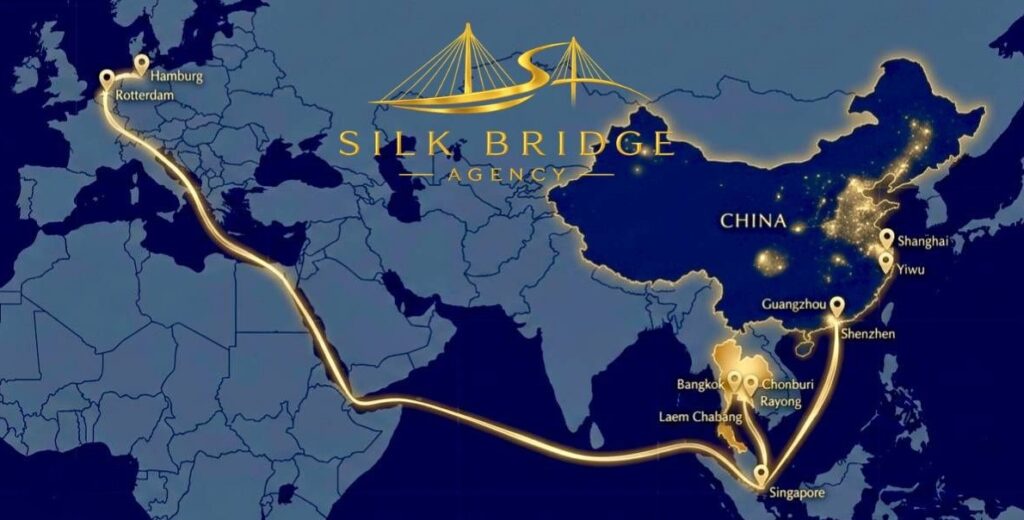
Helping businesses across Europe and the United States source products from China and Thailand with confidence.
Helping businesses across Europe and the United States source products from China and Thailand with confidence.
Contact:
We typically respond within 24 hours.
Where We Are